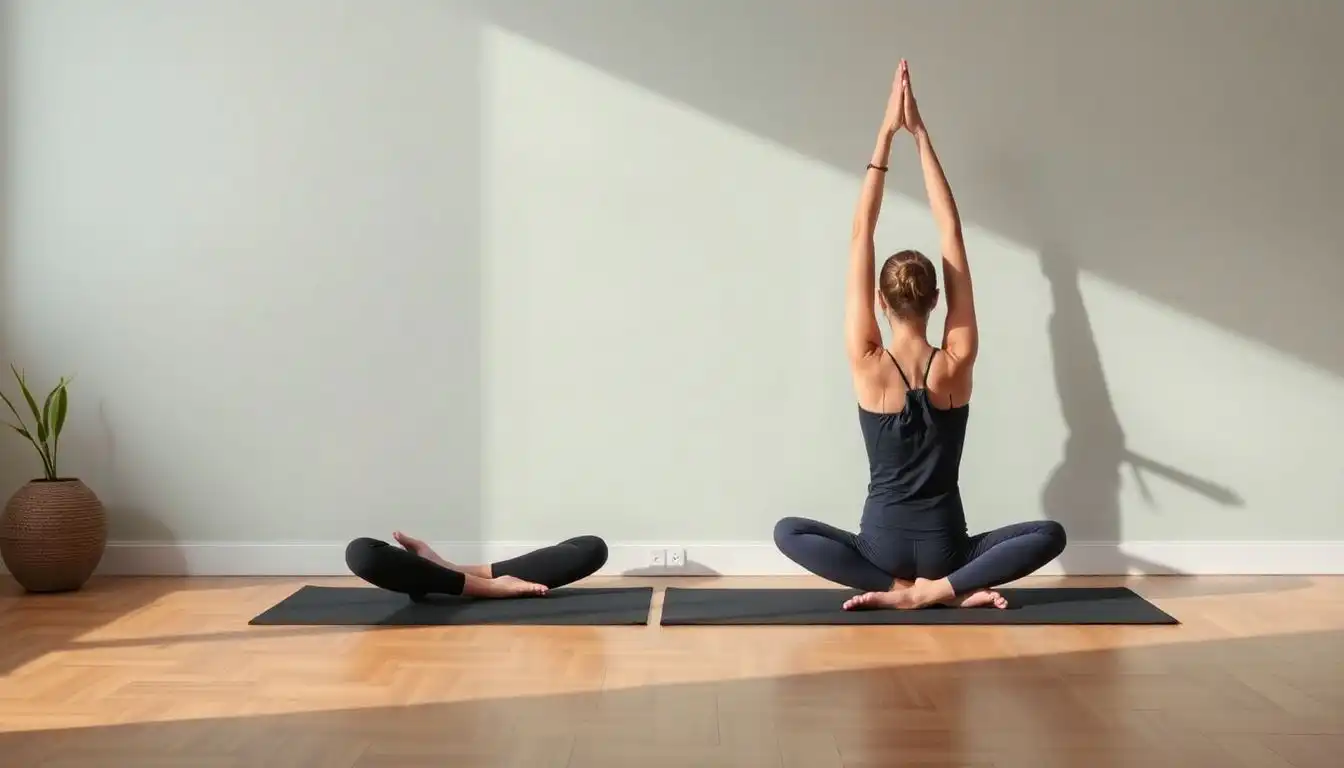
5 Bedtime Yoga Poses That Calm the Mind and Improve Sleep: Getting a decent night’s rest can sometimes feel like a mission, especially when your brain is still buzzing with the day’s events. Whether you have spent the day stuck in Sydney traffic or working under the sun in Queensland, winding down is essential for recovery.
Incorporating a few gentle movements before hitting the hay can significantly shift the state of your nervous system. This practice isn’t about getting a workout or hitting a personal best; it is about telling your body that it is safe to switch off and drift into a deep slumber.
The Australian Sleep Crisis and Why Yoga Works
Many people across the territories report feeling constantly drained, with statistics showing a rise in sleep-related issues. The modern lifestyle, dominated by blue light and high-pressure jobs, keeps our cortisol levels spiked well into the evening hours.
Yoga acts as a natural bridge between the high energy of the day and the stillness required for sleep. By focusing on deep breathing and slow stretching, you activate the parasympathetic nervous system, which lowers your heart rate and prepares the brain for rest.
- Psychologists say the bond between a person and the dog that sleeps in their bed isn’t comparable to human attachment. It’s actually more stable, because the dog never withdraws affection as punishment, never keeps score, and never makes closeness conditional on performance.
- Special Flight from Abu Dhabi Brings 101 Greeks & 45 Pets Home
- First‑Ever Camera Survey of Remote Tasmanian Island Reveals Rare and Elusive Wildlife
- 2 Aircraft Carriers Down, 1 Breaking Apart: The U.S. Navy Is Running Out of Supercarriers During the Iran War
- Being in Your Late 30s and Suddenly Understanding Why Your Parents Stopped Having Hobbies Isn’t Depressing — It’s the Moment You Realize that The Gap Between Having Interests and Having the Energy to Pursue Them Is a Gap that Parenthood Fills with Something that Isn’t Quite Sacrifice and Isn’t Quite Choice, and Naming It Would Require a Word that Doesn’t Exist Yet
Research into evening movement suggests that stretching and deliberate breathing help clear the metabolic waste from the muscles. This physiological reset allows the body to bypass the ‘tired but wired’ state that many office workers experience after a long shift.
The Science of Evening Relaxation
Understanding how your body transitions into sleep can help you appreciate why these specific movements are so effective. When you engage in restorative yoga, you are primarily targeting the vagus nerve, which is the main component of the parasympathetic nervous system.
This nerve oversees a vast array of crucial bodily functions, including mood control and immune response. By stimulating it through gentle forward folds and inversions, you essentially hit the “mute” button on the stress responses that keep you tossing and turning.
| Sleep Factor | Impact of Yoga | Average Improvement |
|---|---|---|
| Time to Fall Asleep | Reduced via lower cortisol | 15–20 Minutes |
| Sleep Quality | Increased REM cycles | 30% Better Depth |
| Evening Anxiety | Mental grounding effect | Significant Reduction |
1. Legs Up the Wall (Viparita Karani)
This pose is an absolute classic for anyone who spends their day on their feet, from tradies to retail staff. It involves lying on your back and resting your legs vertically against a wall, forming an “L” shape with your body.
- Goodbye to Low Pension Payments: Australians Could Receive Over $1,178 From 1 April 2026
- Centrelink New Payment Schedule 2026: What The Updated System Means For Australians
- Aldi’s Belavi Wooden Potting Bench Is a $40 Spring Gardening Must‑Have
- I’m 66 and I Finally Understand that My Father’s Anger when I Came Home Late Wasn’t About Rules — It Was About the 45 Minutes He Spent at The Window Imagining Every Possible Version of What Might Have Happened, and By the Time I Walked Through the Door His Nervous System Had Processed so Many Catastrophic Simulations that The Relief Arrived as Fury Because His Body Didn’t Have a Calmer Way to Discharge the Accumulation
- Research Suggests People Who Shower at Night Instead of In the Morning Aren’t Just Washing Off the Day — They’re Running a Neurological Closing Ritual that Signals the Nervous System the Threat Window Has Ended, and The Water Isn’t Cleaning the Body, It’s Decommissioning a Surveillance State That’s Been Active Since They Opened Their Eyes
It is particularly effective for draining fluid from the lower limbs and relaxing the hamstrings. As the blood flow settles back toward the heart, your heart rate naturally slows down, inducing a sense of profound calm.
Hold this position for at least five minutes while focusing on your breath. You might feel a slight tingling in your feet, which is a normal sign of circulation changes that help the body transition into a resting state.
2. Child’s Pose (Balasana)
Child’s Pose is a universal symbol of rest and is one of the most accessible movements for Aussies of any fitness level. By kneeling on your mat or even your mattress and folding forward, you create a protective “cocoon” for your internal organs.
This position gently stretches the lower back and hips, which are areas where we tend to hold the most tension. It encourages diaphragmatic breathing, as the belly presses against the thighs, forcing the breath into the back of the lungs.
- Iran Strikes Australian Airbase as Gulf Attacks Escalate: Growing Tensions in the Region
- 43 Years Ago, Scientists Dropped Gophers Onto a Volcano. Today, They’re Tiny Heroes.
- Centrelink Age Pension Increase 2026: New Payment Rates and Eligibility Limits Announced
- Nobody Warns You that The Fakest People You’ll Ever Meet Won’t Be the Obvious Ones – They’ll Be the Ones Who Remember Your Birthday, Ask About Your Kids, and Make You Feel Seen Right up Until the Moment Their Kindness Stops Being Useful to Them
- Psychology says people who grow apart from their family as they age aren’t cold or ungrateful – they’re often the ones who finally stopped performing a version of themselves that kept the peace but cost them their identity
Observational studies indicate that forward-folding postures signal to the brain that the body is in a safe environment. This neurological feedback loop is critical for shutting down the ‘fight or flight’ response before sleep.
3. Reclined Butterfly (Supta Baddha Konasana)
Modern life often involves sitting at a desk or behind the wheel, which leads to incredibly tight hip flexors. This pose involves lying on your back with the soles of your feet together and your knees falling open to the sides.
It creates a gentle opening in the pelvis and chest, allowing for deeper, more rhythmic breathing. If the stretch feels too intense for your inner thighs, you can place pillows or rolled-up towels under your knees for extra support.
Spending a few minutes here helps release the physical manifestations of daily stress. Many people find that this specific pose helps quiet the “monkey mind” by grounding the body’s largest joints.
- $341 Parking Fines: Bayside Council Launches New Reporting System…
- $845 Age Pension Rise in April 2026: Full Details for Australian Pensioners…
- Disability Pension Supplements of $1,600 Paid Before 1 April 2026 Nationwide
- Low-Income Australians Eligible for $2,000 Relief as Applications Close 1 April 2026
- Australia Driving Licence Rules for Over-75s 2026: What’s Changing for Senior Drivers
4. Seated Forward Fold (Paschimottanasana)
If your mind is racing with tomorrow’s “to-do” list, this pose is your best friend. Sitting with your legs stretched out in front of you and reaching toward your toes helps draw your senses inward.
The key here is not to touch your toes, but to find a comfortable curve in your spine. This stretch targets the entire posterior chain, which is often tight from a day of movement or static sitting.
Focus on the sound of your breath as you fold. The slight pressure on your frontal lobe as you lower your head can have a sedative effect on the nervous system, making it easier to drift off shortly after.
5. Reclined Spinal Twist (Supta Matsyendrasana)
Twisting movements are often described as “detoxing” for the spine and digestive system. Lying on your back and dropping your knees to one side helps release tension in the obliques and mid-back.
- Centrelink Increase 2026: New JobSeeker, Pension and Youth Payment Rates Revealed…
- I worked for 42 years, retired with more money than I ever imagined having, and by the third Wednesday of my new life I was reorganizing the garage at 10 a.m. just to feel like someone still expected something from me
- I’m 65 and the most frightening thing about losing my joy wasn’t losing it — it was how long it took me to notice it was gone, like a light that dims so slowly you keep thinking the room is fine until one day you can’t read anything anymore
- Australia Introduces New Petrol Pricing Rule With $3,000 Fines for Violations…
- Centrelink Recipients Urged to Claim Part of $475 Million Payout as Robodebt Deadline Arrives Tomorrow
This pose is excellent for those who suffer from back stiffness after a long day. It encourages the spine to lengthen and realign, creating space between the vertebrae that may have compressed during the day.
Ensure your shoulders stay flat on the ground to get the full benefit of the thoracic opening. Gentle twists like this stimulate the digestive organs, which can be helpful if you have had a heavy dinner before bed.
Experts in movement therapy suggest that spinal rotations help regulate the autonomic nervous system. By gently wringing out the connective tissues, the body releases physical blockages that might otherwise manifest as restlessness during the night.
Creating Your Ideal Bedtime Environment
While these poses are powerful, they work best when your environment is also geared toward rest. In Australia, temperature control is a major factor, as a room that is too hot can interfere with the body’s natural cooling process during sleep.
- Centrelink cash boost: Millions of Australians to receive Services Australia payment increase
- I’m 37 and I Just Realized I’ve Been Calling Myself an Introvert for Twenty Years When the Truth is I’m Just Exhausted From Spending My Entire Life Accommodating Other People’s Need for Constant Noise
- The People Who Stay Kind After Being Hurt Aren’t Soft — They’re the Most Structurally Complex People in Any Room, Because They’re Holding Two Truths at The Same Time: That The World Can Be Brutal and That They Refuse to Be, and The Energy Required to Hold Both of Those without Collapsing Into One Is a Weight that Nobody Sees Because It Looks Like Ease
- 3 New Thriller Movies to Watch on Netflix This Week (March 19–25)
- Psychology says the happiest people after 70 aren’t the ones who found purpose — they’re the ones who stopped demanding that every day justify itself, and that permission to exist without producing, achieving, or proving was the thing their happiness was waiting behind the entire time
Try to dim the lights at least thirty minutes before you start your yoga routine. Using warm-toned lamps rather than bright overhead LEDs can help stimulate the production of melatonin, the hormone responsible for your sleep-wake cycle.
Minimal noise and a clutter-free space also contribute to a calmer mind. If you live in a busy metropolitan area, consider using white noise or gentle nature sounds to mask the hum of the city while you move through your poses.
The Importance of Consistency
You do not need to spend an hour on the mat to see the benefits of bedtime yoga. Even ten minutes of dedicated movement can change the trajectory of your night’s sleep if done consistently.
Treat this time as a non-negotiable part of your hygiene routine, much like brushing your teeth. Over time, your brain will begin to associate these specific stretches with the act of falling asleep, making the transition faster and easier.
- Centrelink Compliance Alert April 2026: What the Loss of Up to $7,800 in Benefits Means for Claimants
- $1,178 Centrelink Age Pension in 2026 – What The Increase Means For Australian Seniors
- Psychology says the reason most people never change their lives isn’t fear of failure – it’s that they’ve spent so long performing a version of themselves for other people that they genuinely can’t tell anymore which desires are actually theirs
- Psychology Says the Loneliest Part of High Intelligence Isn’t Being Misunderstood — It’s Watching People You Care About Make Decisions You Can See Will Hurt Them and Knowing that Explaining Why Won’t Help Because the Gap Isn’t in Information, It’s in How You Process Consequences Six Moves Ahead While They’re Still on Move One
- I’m 66 and I’ve Been Retired for Four Years and The Strangest Part Isn’t the Boredom or The Money or The Free Time — It’s that I Finally Have Space to Think and I’m Realizing I Don’t Actually Like the Person I Built My Entire Career Around Becoming
If you miss a night, don’t worry about it; just pick it back up the next evening. The goal is to build a sustainable habit that supports your long-term health and wellbeing without becoming another source of stress.
Listening to Your Body
It is vital to remember that everyone’s flexibility and energy levels fluctuate. Some nights you might feel like holding Legs Up the Wall for ten minutes, while other nights you might only manage a quick Child’s Pose.
Always move with a sense of ease and never push yourself into pain. Yoga for sleep should feel like a massage from the inside out, rather than a physical challenge. If a pose doesn’t feel right, skip it or use props like cushions to make it more comfortable.
Adapting the practice to your specific needs is what makes it a powerful tool for longevity. By paying attention to what your body requires each evening, you develop a deeper connection with your physical self, which is the ultimate goal of any mindfulness practice.
- Psychology Says the Moment You Stop Trying to Become Your “best Self” and Start Accepting Your Actual Self Is the Moment Most People Describe as The Turning Point – Not Because They Gave up But Because They Finally Stopped Performing for An Audience that Was Never Going to Approve of Them Anyway
- When someone is outwardly cheerful but still feels deeply alone, psychologists say these 10 quiet behaviors often reveal the disconnect
- $215.40 Centrelink Rent Assistance Increase 2025: Who Qualifies and Payment Details
- Centrelink Payment Increase 2026: New Rates For JobSeeker Pensions And Youth Allowance
- $845 Age Pension Hike in April 2026: What Centrelink’s Latest Changes Mean for Pensioners
FAQs – 5 Bedtime Yoga Poses That Calm the Mind and Improve Sleep
Do I need a yoga mat to do these poses?
No, you can easily perform these movements on a rug, a carpeted floor, or even directly on your mattress. The goal is comfort, so as long as the surface is flat and supportive, you are good to go.
How long should I hold each pose for maximum benefit?
Aim to hold each position for about 1 to 3 minutes. If a particular pose feels exceptionally restorative, like Legs Up the Wall, you can extend that to 5 or 10 minutes depending on your schedule.
Should I do these poses right before I get into bed?
Yes, performing these stretches within 30 minutes of your intended sleep time is ideal. This ensures that the relaxation response triggered by the movements carries over as you tuck yourself in.
Is it okay to do yoga after a big meal?
It is usually better to wait at least an hour after eating a heavy meal before doing any twists or forward folds. If you are feeling full, stick to more passive poses like Child’s Pose with your knees wide to avoid discomfort.
- Children Who Were Praised for Being Helpful and Easy Often Become Adults Who Are Remarkably Kind and Deeply Lonely at The Same Time – Because They Learned that Being Low-Maintenance Was how You Earned Love, and Now They Can’t Ask for What They Need without Feeling Like a Burden
- Psychology says the parents whose adult children gradually stop visiting aren’t usually the ones who were cruel or absent — they’re often the ones so focused on providing and protecting that they never learned to simply be company, and children grow up moving towards the people they feel easy with rather than the people they owe the most to
- American Tourist Briefly Detained in Bali for Breaking ‘Day of Silence’ Rules
- Psychology says the quiet rage many older men carry isn’t bitterness, it’s the accumulation of decades where expressing vulnerability would have cost them everything — their authority, their marriages, their self-respect — so they stored it as anger because anger was the only emotion their generation allowed men to keep
- If You Want To Find True Inner Peace, Start Saying “no” to These 8 Things
Can children or the elderly do this routine?
Absolutely. These poses are gentle and can be modified for almost any age or mobility level. They are a great way for the whole family to wind down after a busy Australian day.
What if I am not flexible enough to touch my toes?
Flexibility is not a requirement for bedtime yoga. You can bend your knees as much as you need in Seated Forward Fold. The benefit comes from the relaxation of the nervous system, not the depth of the stretch.
Will these poses help with chronic insomnia?
While yoga is a brilliant tool for improving sleep hygiene, chronic insomnia can be complex. These poses help reduce the stress that often exacerbates sleep issues, but they should be used as part of a broader health approach.