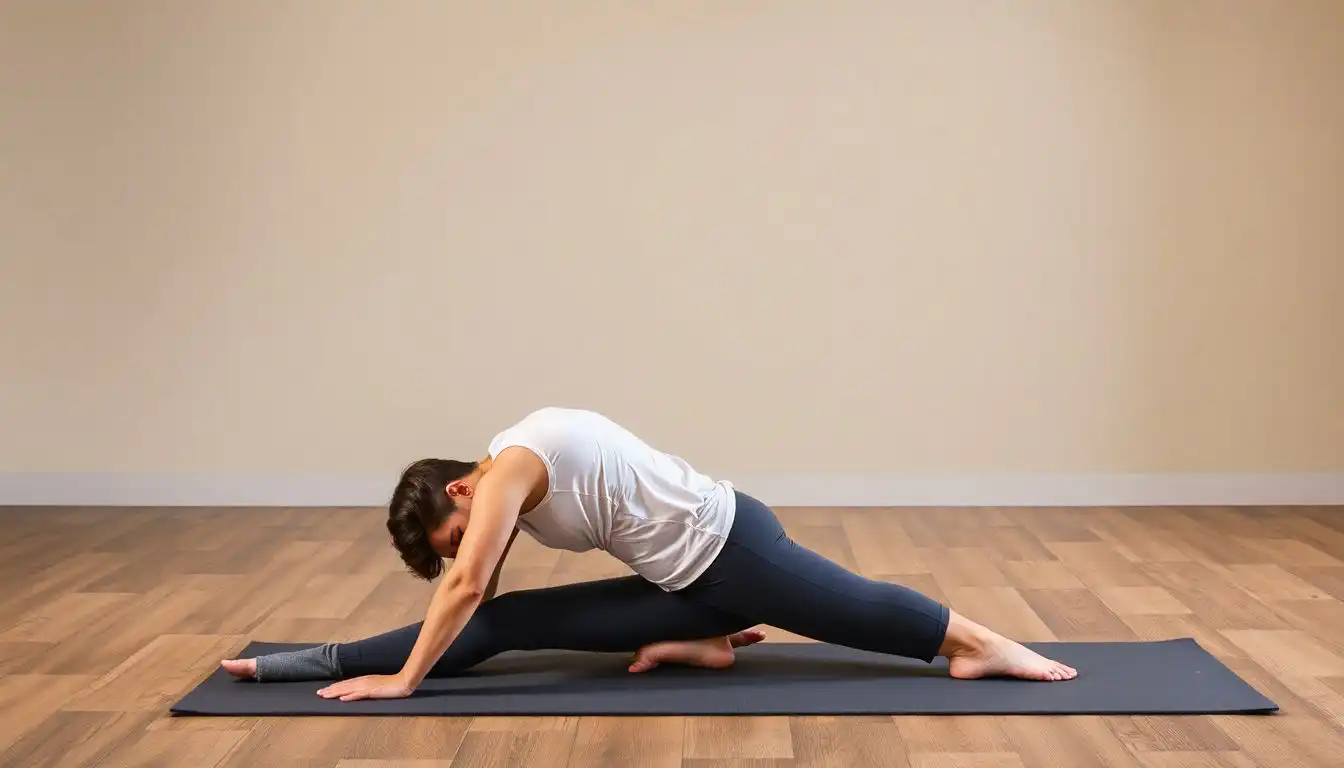
7 yoga poses for better flexibility and mobility: Finding the time to look after your body can feel like a tall order when you are balancing work, family, and the occasional weekend trip to the coast. However, maintaining your range of motion is the secret to staying active and injury-free as the years roll by.
Yoga offers a practical way to undo the tightness caused by long commutes in Sydney traffic or hours spent hunched over a laptop. By integrating a few specific movements into your daily routine, you can improve how you move during everything from a morning surf to a casual game of backyard cricket.
The following guide explores seven essential poses designed to unlock your joints and lengthen your muscles. These movements focus on functional mobility, ensuring your body remains resilient and ready for whatever the Australian lifestyle throws your way.
Understanding the Difference Between Flexibility and Mobility
Many people use these terms interchangeably, but they represent different aspects of physical health. Flexibility is the ability of a muscle to stretch passively, while mobility refers to the active range of motion within a joint. Think of it as the difference between being able to pull your leg into a stretch and being able to lift it unaided.
- Australia Age Pension Increase 2026 Guide
- Centrelink Digital Payment System From 1 April 2026: Faster Benefit Deposits For Australians
- Psychology says the parents whose adult children gradually stop visiting aren’t usually the ones who were cruel or absent — they’re often the ones so focused on providing and protecting that they never learned to simply be company, and children grow up moving towards the people they feel easy with rather than the people they owe the most to
- I’m 65 and the most frightening thing about losing my joy wasn’t losing it — it was how long it took me to notice it was gone, like a light that dims so slowly you keep thinking the room is fine until one day you can’t read anything anymore
- Iran Strikes Australian Airbase as Gulf Attacks Escalate: Growing Tensions in the Region
Improving both is vital for preventing the “stiff as a board” feeling that often creeps in after age thirty. When your joints move freely, your muscles don’t have to work as hard to perform basic tasks. This efficiency reduces fatigue and lowers the risk of common strains in the lower back and shoulders.
Focusing on these attributes also helps with posture. Many Australians spend a significant portion of their day sitting, which leads to tight hip flexors and rounded shoulders. Yoga serves as the perfect antidote to these modern postural habits by opening up the front of the body and strengthening the back.
The Growing Popularity of Yoga in Australia
From the beaches of Bondi to the quiet suburbs of Perth, yoga has become a staple of the national fitness landscape. It is no longer seen as just a spiritual practice but as a legitimate form of physical therapy and strength training. The accessibility of the practice means anyone can start, regardless of their current fitness level.
“Active recovery is becoming a cornerstone of modern fitness routines. Moving the body through a full range of motion under tension helps to lubricate the joints and improve the quality of connective tissue, which is essential for long-term physical durability.”
Also Read
- Being in Your Late 30s and Suddenly Understanding Why Your Parents Stopped Having Hobbies Isn’t Depressing — It’s the Moment You Realize that The Gap Between Having Interests and Having the Energy to Pursue Them Is a Gap that Parenthood Fills with Something that Isn’t Quite Sacrifice and Isn’t Quite Choice, and Naming It Would Require a Word that Doesn’t Exist Yet
- Psychology says people who never expect much from others often aren’t pessimistic—they’re just operating from experience
- $1,178 Age Pension Increase Starting 13 March 2026 – Centrelink Confirms Payment Boost
- Psychology Says the Loneliest Part of High Intelligence Isn’t Being Misunderstood — It’s Watching People You Care About Make Decisions You Can See Will Hurt Them and Knowing that Explaining Why Won’t Help Because the Gap Isn’t in Information, It’s in How You Process Consequences Six Moves Ahead While They’re Still on Move One
- Nobody Warns You that The Fakest People You’ll Ever Meet Won’t Be the Obvious Ones – They’ll Be the Ones Who Remember Your Birthday, Ask About Your Kids, and Make You Feel Seen Right up Until the Moment Their Kindness Stops Being Useful to Them
Whether you prefer a heated studio in Melbourne or a solo session in your living room, the benefits remain the same. Consistency is the primary factor in seeing results. Even fifteen minutes a day can lead to noticeable changes in how your body feels and moves within just a few weeks.
1. Downward-Facing Dog for Full Body Length
This iconic pose is a powerhouse for lengthening the entire posterior chain. It targets the hamstrings, calves, and lower back while also building stability in the shoulders. For many, this is the ultimate “reset” button for the body after a long day of sitting or standing.
To perform it, start on your hands and knees, then lift your hips toward the ceiling to create an inverted “V” shape. Do not worry if your heels do not touch the ground immediately. Keeping a slight bend in the knees can actually help you find more length in your spine, which is the ultimate goal of the movement.
2. Pigeon Pose for Deep Hip Opening
Tight hips are a common grievance for those who spend a lot of time driving or at a desk. The Pigeon Pose is perhaps the most effective way to target the glutes and the deep rotators of the hip. Extending one leg back while folding the other forward creates a deep, satisfying stretch.
- The People Who Stay Kind After Being Hurt Aren’t Soft — They’re the Most Structurally Complex People in Any Room, Because They’re Holding Two Truths at The Same Time: That The World Can Be Brutal and That They Refuse to Be, and The Energy Required to Hold Both of Those without Collapsing Into One Is a Weight that Nobody Sees Because It Looks Like Ease
- Centrelink New Payment Schedule 2026: What The Updated System Means For Australians
- Centrelink Recipients Urged to Claim Part of $475 Million Payout as Robodebt Deadline Arrives Tomorrow
- I’m 66 and I Finally Understand that My Father’s Anger when I Came Home Late Wasn’t About Rules — It Was About the 45 Minutes He Spent at The Window Imagining Every Possible Version of What Might Have Happened, and By the Time I Walked Through the Door His Nervous System Had Processed so Many Catastrophic Simulations that The Relief Arrived as Fury Because His Body Didn’t Have a Calmer Way to Discharge the Accumulation
- Special Flight from Abu Dhabi Brings 101 Greeks & 45 Pets Home
It is important to move into this pose slowly to protect the knee joint. If the stretch feels too intense, you can use a folded towel or a firm cushion under your hip for support. This modification ensures you can relax into the pose rather than tensing up against the discomfort.
3. Low Lunge to Counteract Sitting
The hip flexors at the front of your thighs often become “shortened” from prolonged sitting. A Low Lunge specifically targets these muscles, helping to pull your pelvis back into a neutral alignment. This can significantly reduce the pressure on your lower back.
While in the lunge, keep your chest lifted and your core gently engaged. This prevents you from “dumping” your weight into your lower spine. Reaching your arms toward the sky adds an extra element of chest opening, making it a great counter-pose to the hunched position many of us take while using smartphones.
“The relationship between hip mobility and lower back health cannot be overstated. When the hips are locked down, the lumbar spine is often forced to compensate, leading to the chronic aches that many adults experience daily.”
Also Read
- 9 Things People with Genuinely High Social Intelligence Never Do in A Conversation — and The One that Separates Them Most Clearly from People Who Are Merely Charming Is Something so Subtle that Most People Have Never Consciously Noticed It Happening
- Psychology says the quiet rage many older men carry isn’t bitterness, it’s the accumulation of decades where expressing vulnerability would have cost them everything — their authority, their marriages, their self-respect — so they stored it as anger because anger was the only emotion their generation allowed men to keep
- $1,178 Centrelink Age Pension in 2026 – What The Increase Means For Australian Seniors
- Goodbye Centrelink Top-Ups as Simple Error Triggers $3,200 Payment Loss
- Psychology says people who grow apart from their family as they age aren’t cold or ungrateful – they’re often the ones who finally stopped performing a version of themselves that kept the peace but cost them their identity
4. Cat-Cow for Spinal Fluidity
This dynamic movement is less of a static stretch and more of a mobiliser for the vertebrae. By syncing your breath with the arching and rounding of your back, you encourage blood flow to the spinal discs. It is a gentle way to wake up the nervous system in the morning.
As you inhale, drop your belly and look up slightly to broaden the collarbones. As you exhale, tuck your chin and round your spine like a stretching cat. This simple flow helps to break up “stuck” sensations in the mid-back and neck, areas where many Australians carry a lot of stress.
5. Trikonasana (Triangle Pose) for Lateral Mobility
Most of our daily movements happen in a forward-and-back plane. Triangle Pose encourages the body to move laterally, stretching the obliques and the insides of the thighs. This side-body opening is crucial for maintaining a full range of motion in the torso.
Stand with your feet wide, turn one foot out, and reach down toward your shin or a block. Keeping both sides of your waist long is more important than touching the floor. This pose also helps to strengthen the legs and ankles, providing a stable foundation for other physical activities.
- I bought my grandparents’ house and lived next to my mom. When she decided to move, it was hard on both of us.
- Aldi’s Belavi Wooden Potting Bench Is a $40 Spring Gardening Must‑Have
- American Tourist Briefly Detained in Bali for Breaking ‘Day of Silence’ Rules
- Centrelink Payment Increase 2026: New Rates For JobSeeker Pensions And Youth Allowance
- Psychology Says the Moment You Stop Trying to Become Your “best Self” and Start Accepting Your Actual Self Is the Moment Most People Describe as The Turning Point – Not Because They Gave up But Because They Finally Stopped Performing for An Audience that Was Never Going to Approve of Them Anyway
Investment in Physical Health
Maintaining mobility does not require a massive financial investment. While a gym membership might cost upwards of $20 to $30 a week, a basic yoga mat can be purchased for a one-off cost of around $40. The real investment is the time you carve out for yourself.
| Equipment Needed | Estimated Cost (AUD) | Benefit |
|---|---|---|
| Standard Yoga Mat | $30 – $120 | Cushioning and grip for stability |
| Yoga Blocks (Pair) | $15 – $40 | Brings the floor closer for ease |
| Resistance Band | $10 – $25 | Assists in deep hamstring stretches |
| Foam Roller | $20 – $60 | Massages fascia before yoga practice |
6. Cobra Pose for Chest and Shoulder Opening
Modern life tends to pull our shoulders forward. Cobra Pose works to reverse this by strengthening the muscles of the upper back and stretching the chest. It is a vital movement for maintaining healthy lung capacity and a proud, upright posture.
Lie on your stomach and gently peel your chest off the floor using the strength of your back muscles. Keep your elbows tucked in close to your ribs rather than splaying them out. This engagement protects the rotator cuff and ensures the effort is distributed evenly throughout the posterior chain.
7. Thread the Needle for Thoracic Rotation
If you find it difficult to look over your shoulder while reversing the car, you likely need more thoracic (mid-back) rotation. Thread the Needle is a gentle twisting pose that targets the space between the shoulder blades and the sides of the neck.
- If You Want To Find True Inner Peace, Start Saying “no” to These 8 Things
- $341 Parking Fines: Bayside Council Launches New Reporting System…
- Centrelink Compliance Alert April 2026: What the Loss of Up to $7,800 in Benefits Means for Claimants
- When someone is outwardly cheerful but still feels deeply alone, psychologists say these 10 quiet behaviors often reveal the disconnect
- Children Who Were Praised for Being Helpful and Easy Often Become Adults Who Are Remarkably Kind and Deeply Lonely at The Same Time – Because They Learned that Being Low-Maintenance Was how You Earned Love, and Now They Can’t Ask for What They Need without Feeling Like a Burden
From a hands-and-knees position, slide one arm underneath the other until your shoulder rests on the mat. This rotation helps to release tension in the upper back that is often missed by standard stretches. It is a calming pose that also provides a mild stretch to the deltoids.
“Improving rotation in the middle of the back is a key factor in shoulder health. When the ribs and mid-spine are mobile, the shoulder blades can glide properly, preventing the impingement issues common in overhead athletes and manual workers.”
Practical Tips for a Successful Home Practice
You do not need a fancy studio to see improvements in your mobility. Setting up a small space in a quiet corner of your home is often enough to establish a habit. Try to practice at a time when you won’t be interrupted, perhaps before the kids wake up or right after you finish work to signal the end of the day.
Wear comfortable clothing that allows you to move freely without restriction. In the Australian summer, breathable fabrics like cotton or moisture-wicking synthetics are best. Remember to stay hydrated, especially if you are practicing in a warmer climate or outdoors in the sun.
- Centrelink Increase 2026: New JobSeeker, Pension and Youth Payment Rates Revealed…
- Psychology says the reason most people never change their lives isn’t fear of failure – it’s that they’ve spent so long performing a version of themselves for other people that they genuinely can’t tell anymore which desires are actually theirs
- 43 Years Ago, Scientists Dropped Gophers Onto a Volcano. Today, They’re Tiny Heroes.
- First‑Ever Camera Survey of Remote Tasmanian Island Reveals Rare and Elusive Wildlife
- I worked for 42 years, retired with more money than I ever imagined having, and by the third Wednesday of my new life I was reorganizing the garage at 10 a.m. just to feel like someone still expected something from me
Focus on your breathing rather than the perfect execution of the pose. Shallow breaths signal to the brain that the body is under stress, which can cause muscles to tighten further. Deep, belly breathing encourages the parasympathetic nervous system to take over, allowing your muscles to relax into the stretches more effectively.
Developing a Long-Term Habit
Mobility is not a destination but a continuous process. You won’t become “flexible” overnight, but you will notice small wins along the way. Perhaps you can reach your toes more easily, or your back feels less stiff when you get out of bed in the morning.
Celebrate these small milestones as they are the true indicators of progress. Whether you are active in AFL, love long walks in the Bush, or just want to feel better in your body, these seven poses provide a solid foundation for a lifetime of movement.
FAQs – 7 yoga poses for better flexibility and mobility
How long should I hold each yoga pose?
For mobility and flexibility, holding a pose for 30 to 60 seconds is usually ideal. This gives the nervous system enough time to signal the muscles to relax and lengthen without causing unnecessary strain.
- Low-Income Australians Eligible for $2,000 Relief as Applications Close 1 April 2026
- I’m 37 and I Just Realized I’ve Been Calling Myself an Introvert for Twenty Years When the Truth is I’m Just Exhausted From Spending My Entire Life Accommodating Other People’s Need for Constant Noise
- $931 Centrelink Payment Approved in Australia: Who Qualifies and When It’s Paid…
- Centrelink cash boost: Millions of Australians to receive Services Australia payment increase
- Rent Assistance for Pensioners Climbs to $188.20 per Fortnight in 1 April 2026
Do I need to be flexible to start yoga?
Saying you are too stiff for yoga is like saying you are too dirty to take a bath. Yoga is the tool you use to gain flexibility, so being “inflexible” is actually the best reason to start a regular practice.
How often should I practice these poses?
Consistency is more important than duration. Practising for 10 to 15 minutes every day will yield much better results than doing one long 90-minute session once a week.
Can yoga help with chronic back pain?
While yoga can significantly improve back health by strengthening supporting muscles, it is always best to consult a healthcare professional first. Focus on gentle movements like Cat-Cow if you are recovering from an injury.
Is it better to do yoga in the morning or evening?
Morning sessions can help wake up the body and shake off stiffness, while evening sessions are great for decompressing after a day of work. Choose the time that fits best with your schedule so you can stick to it.
- $215.40 Centrelink Rent Assistance Increase 2025: Who Qualifies and Payment Details
- Disability Pension Supplements of $1,600 Paid Before 1 April 2026 Nationwide
- Australia Driving Licence Rules for Over-75s 2026: What’s Changing for Senior Drivers
- Research Suggests People Who Shower at Night Instead of In the Morning Aren’t Just Washing Off the Day — They’re Running a Neurological Closing Ritual that Signals the Nervous System the Threat Window Has Ended, and The Water Isn’t Cleaning the Body, It’s Decommissioning a Surveillance State That’s Been Active Since They Opened Their Eyes
- 2 Aircraft Carriers Down, 1 Breaking Apart: The U.S. Navy Is Running Out of Supercarriers During the Iran War
Should it hurt when I am stretching?
You should feel a “productive” sensation of stretching, but never sharp or stabbing pain. If you feel pain in your joints or a pinching sensation, back out of the pose immediately and use a modification.