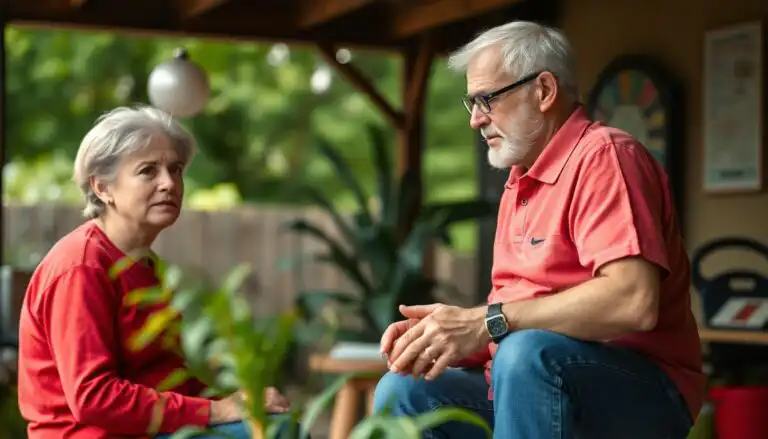
I’m 66 and I finally understand that my father’s anger when I came home late wasn’t about rules: it was a physical manifestation of a nervous system stretched to its breaking point. Looking back from the vantage point of my sixties, the memory of those explosive confrontations at the front door has shifted from a story of strict parenting to one of deep, agonizing love.
For decades, I carried the resentment of a teenager who felt controlled by a clock, never realizing that while I was out at the milk bar or down at the beach, my father was pacing the hallway. He wasn’t counting the minutes to punish me; he was counting the heartbeats of a man convinced his world was about to end.
Now, as I sit in my own home in suburban Australia, reflecting on the generations of men who struggled to speak their fears, I see that his rage was merely the only language he had for relief. The silence of the night in the bush or the quiet streets of the city has a way of amplifying a parent’s darkest imaginations.
The Architecture of Parental Anxiety
When I was seventeen, coming home forty-five minutes past my curfew felt like a minor strike for independence. I would creep up the driveway, hoping the gravel wouldn’t crunch too loudly under my boots, only to find every light in the house blazing. My father would be standing there, face flushed, voice booming before I even crossed the threshold.
- $1,178 Age Pension Increase Starting 13 March 2026 – Centrelink Confirms Payment Boost
- $480 Medicare Safety Net Reset: New Threshold Applies From 1 April 2026
- Centrelink Payment Increase 2026: New Rates For JobSeeker Pensions And Youth Allowance
- Goodbye to Low Pension Payments: Australians Could Receive Over $1,178 From 1 April 2026
- Centrelink New Payment Schedule 2026: What The Updated System Means For Australians
To my young mind, this was about authority and his need to be the “boss” of the house. I didn’t understand that for the last hour, he had been mentally visiting emergency departments and picturing roadside accidents on winding coastal roads. His brain had run a thousand simulations of tragedy, and each one felt real to his biology.
The human body isn’t designed to hold that level of cortisol and adrenaline for long periods without some form of release. When I finally walked through that door, safe and sound, his nervous system flipped from “fight or flight” to a massive discharge of energy. Because he didn’t have the emotional tools to weep with relief, he shouted with fury.
“Hyper-vigilance in parents often masks a deep-seated fear of loss that the conscious mind cannot process. When the perceived threat vanishes, the body must dump the accumulated stress hormones rapidly, frequently resulting in an outburst of anger rather than an expression of comfort.”
The Cultural Weight of the ‘Strong, Silent’ Aussie Dad
In the Australia of my youth, men were taught that vulnerability was a weakness to be avoided at all costs. My father, like many men of his era, was raised to be the protector and the provider, roles that demand a certain level of emotional stoicism. He didn’t know how to tell me that his heart was thumping against his ribs like a trapped bird.
- 3 New Thriller Movies to Watch on Netflix This Week (March 19–25)
- Aldi’s Belavi Wooden Potting Bench Is a $40 Spring Gardening Must‑Have
- Psychology says the quiet rage many older men carry isn’t bitterness, it’s the accumulation of decades where expressing vulnerability would have cost them everything — their authority, their marriages, their self-respect — so they stored it as anger because anger was the only emotion their generation allowed men to keep
- Centrelink Age Pension Increase 2026: New Payment Rates and Eligibility Limits Announced
- Special Flight from Abu Dhabi Brings 101 Greeks & 45 Pets Home
Instead of saying, “I love you so much that the thought of you being hurt is unbearable,” he said, “Do you have any idea what time it is?” The former would have required a level of emotional literacy he wasn’t granted by his own upbringing. The latter allowed him to maintain the mask of the disciplinarian while his insides were still reeling from the shock of his own imagination.
This cultural backdrop created a generational gap in understanding. We saw their anger as a barrier, while they saw it as a shield. We didn’t realize that their “toxic” traits were often just poorly translated survival instincts. He wasn’t trying to ruin my night; he was trying to survive his own.
A Physiological Explosion of Relief
The transition from catastrophic thinking to the reality of safety is a violent one for the body. Imagine holding a heavy weight above your head for an hour; when you finally drop it, your muscles don’t just relax, they quiver and spasm. This is essentially what happens to the nervous system during a prolonged period of worry.
By the time I turned the key in the lock, my father had lived through a dozen different funerals. He had spoken to the police in his head and identified my body in a morgue. These aren’t just thoughts; they trigger the same physiological responses as actual trauma.
- I worked for 42 years, retired with more money than I ever imagined having, and by the third Wednesday of my new life I was reorganizing the garage at 10 a.m. just to feel like someone still expected something from me
- Low-Income Australians Eligible for $2,000 Relief as Applications Close 1 April 2026
- I bought my grandparents’ house and lived next to my mom. When she decided to move, it was hard on both of us.
- Psychologists say the bond between a person and the dog that sleeps in their bed isn’t comparable to human attachment. It’s actually more stable, because the dog never withdraws affection as punishment, never keeps score, and never makes closeness conditional on performance.
- Centrelink Digital Payment System From 1 April 2026: Faster Benefit Deposits For Australians
When the “trigger” of that trauma—my absence—was removed, his body ended the simulation abruptly. The fury was the “reset” button. It was a biological purge of the terror he had been marinating in since the clock struck eleven.
Comparing Parental Stress Responses
| Response Type | Internal Experience | External Expression |
|---|---|---|
| The Silent Treatment | Shock and emotional shutdown. | Withdrawal, refusal to engage. |
| Explosive Anger | Nervous system overload. | Shouting, pacing, heavy breathing. |
| Hyper-Governance | Need for environmental control. | Strict rules, tracking, frequent calling. |
The 45 Minutes at the Window
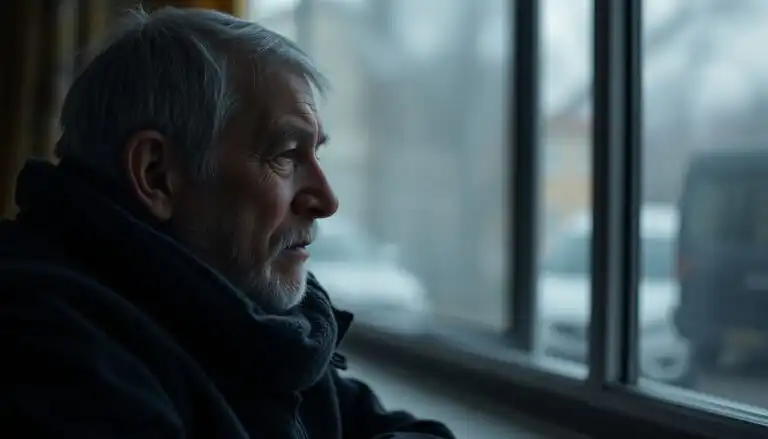
I can picture him now at the louvred windows, peering out into the darkness of our street. He wasn’t looking for a reason to get mad; he was looking for a sign that his world was still intact. Every pair of headlights that passed by without turning into our driveway was a fresh serration on his nerves.
At 66, I have felt that same tightness in the chest when my own grown children don’t answer a text or arrive when they said they would. The difference is that I have the vocabulary to name it. I can tell my wife, “I’m feeling really anxious right now,” whereas my father only had the option to let that anxiety curdle into resentment.
The “45 minutes” is a metaphor for the liminal space between safety and disaster. It is a lonely place for a parent to inhabit. It’s where the mind goes when it has too much love for a person and not enough control over the world they inhabit.
- When someone is outwardly cheerful but still feels deeply alone, psychologists say these 10 quiet behaviors often reveal the disconnect
- Tropical Cyclone Narelle Hits Far North Queensland: Residents Take Shelter as Storm Causes Destruction
- Centrelink Recipients Urged to Claim Part of $475 Million Payout as Robodebt Deadline Arrives Tomorrow
- Iran Strikes Australian Airbase as Gulf Attacks Escalate: Growing Tensions in the Region
- $845 Age Pension Hike in April 2026: What Centrelink’s Latest Changes Mean for Pensioners
“The inability to distinguish between a personal safety threat and the anxiety regarding a loved one leads to a sympathetic nervous system hijack. In these moments, the brain’s logic centers go offline, leaving only the primal urge to scream as a defense mechanism.”
Breaking the Cycle of Misinterpretation
Understanding this doesn’t excuse the harsher moments of our childhoods, but it does contextualize them. It allows us to hold a mirror up to our past and see our parents as flawed, frightened humans rather than the omnipotent villains we sometimes felt they were.
For those of us in the baby boomer generation, this realization often comes late. We spent our middle years trying not to be like our fathers, only to realize in our senior years that we shared the same heart, just a different set of tools. We can finally forgive the yelling because we finally understand the fear.
If I could go back to those nights on the verandah, I wouldn’t argue. I wouldn’t roll my eyes or complain about the “unfair” rules. I would probably just give the old man a hug and tell him I’m home, acknowledging the invisible war he just finished fighting in his own mind.
- If You Want To Find True Inner Peace, Start Saying “no” to These 8 Things
- Psychology says the reason most people never change their lives isn’t fear of failure – it’s that they’ve spent so long performing a version of themselves for other people that they genuinely can’t tell anymore which desires are actually theirs
- American Tourist Briefly Detained in Bali for Breaking ‘Day of Silence’ Rules
- 2 Aircraft Carriers Down, 1 Breaking Apart: The U.S. Navy Is Running Out of Supercarriers During the Iran War
- First‑Ever Camera Survey of Remote Tasmanian Island Reveals Rare and Elusive Wildlife
Forgiveness Through the Lens of Biology
The healing process starts when we stop looking at the anger as an attack and start seeing it as a symptom. My father’s body was reacting to a perceived loss of life, and his anger was the sound of his heart restarting. It was a messy, loud, and uncomfortable way to say, “I can’t lose you.”
In the Australian suburbs, where we often value “getting on with it” over “talking it out,” these realizations are a form of quiet revolution. We are learning to deconstruct the masculine archetypes that kept our fathers in mental cages, allowing us to interact with our own children and grandchildren with more grace.
At 66, the anger is gone. All that remains is the image of a man at a window, terrified of a world he couldn’t control, and the overwhelming relief of a door opening.
“Reframing parental conflict as a biological event rather than a moral failing allows for a deeper level of generational healing. It shifts the narrative from one of oppression to one of misunderstood protective instincts.”
Also Read
- $1,178 Centrelink Age Pension in 2026 – What The Increase Means For Australian Seniors
- 43 Years Ago, Scientists Dropped Gophers Onto a Volcano. Today, They’re Tiny Heroes.
- I’m 65 and the most frightening thing about losing my joy wasn’t losing it — it was how long it took me to notice it was gone, like a light that dims so slowly you keep thinking the room is fine until one day you can’t read anything anymore
- Goodbye Centrelink Top-Ups as Simple Error Triggers $3,200 Payment Loss
- Rent Assistance for Pensioners Climbs to $188.20 per Fortnight in 1 April 2026
FAQs – I’m 66 and I Finally Understand my Father’s Anger
Why do some parents react with anger instead of relief when a child returns home safe?
The brain’s amygdala remains in a state of high alert during the period of waiting. When the child returns, the sudden drop in stress levels causes the nervous system to “misfire,” releasing the built-up tension as aggression or shouting as a way to quickly expel adrenaline.
Is this type of behavior specific to a certain generation?
While common in many cultures, it was particularly prevalent in generations where men were discouraged from expressing fear or vulnerability. In these contexts, anger was often the only socially acceptable emotion for men to display, serving as a catch-all for fear, grief, and even love.
How does understanding this help adult children today?
It allows for a process called “cognitive reframing,” where painful memories are viewed through a more empathetic lens. This can reduce long-term resentment and help adult children forgive their parents for what they once perceived as unnecessary cruelty or control.
What can modern parents do to avoid this “anger-relief” cycle?
Practicing mindfulness and emotional regulation can help stay in the “window of tolerance.” Modern parents are encouraged to verbally acknowledge their fear, saying things like “I was really scared you were hurt,” which directs the energy toward connection rather than conflict.
- Psychology says the parents whose adult children gradually stop visiting aren’t usually the ones who were cruel or absent — they’re often the ones so focused on providing and protecting that they never learned to simply be company, and children grow up moving towards the people they feel easy with rather than the people they owe the most to
- I’m 37 and I Just Realized I’ve Been Calling Myself an Introvert for Twenty Years When the Truth is I’m Just Exhausted From Spending My Entire Life Accommodating Other People’s Need for Constant Noise
- Psychology says people who grow apart from their family as they age aren’t cold or ungrateful – they’re often the ones who finally stopped performing a version of themselves that kept the peace but cost them their identity
- Centrelink cash boost: Millions of Australians to receive Services Australia payment increase
- Australia Age Pension Increase 2026 Guide
Does this mean the anger was “good” because it came from love?
Not necessarily. While the root cause was love and fear, the expression of that anger can still be damaging to a child’s sense of security. Understanding the cause helps with healing, but it also highlights the importance of developing healthier emotional outlets.