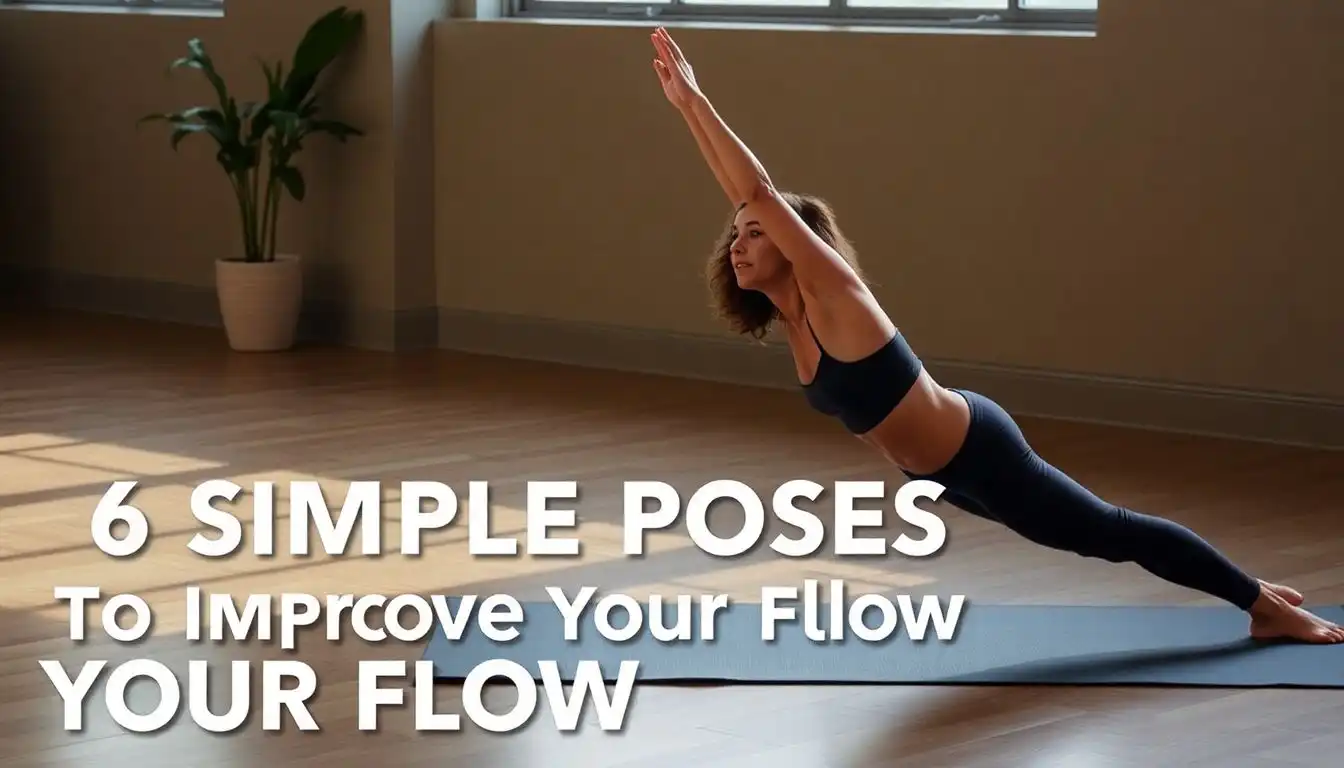
6 Simple Poses To Improve Your Yoga Flow: Stepping onto the mat at a local studio in Bondi or a quiet community hall in Adelaide feels like a breath of fresh air. Whether you are a weekend warrior or a dedicated practitioner, the secret to a seamless practice lies in the fundamentals of movement.
Refining your transition between postures determines how much energy you preserve during a session. By mastering a few foundational shapes, you can transform a clunky sequence into a moving meditation that feels as effortless as a summers day at the beach.
Integrating these specific poses into your routine helps build the core strength and flexibility required for more advanced sequences. Most Australian yogis find that focusing on the basics provides a solid platform for long-term physical health and mental clarity.
The Importance of Foundation in Yoga Flow
A successful yoga flow is less about the destination and more about how you navigate the space between the poses. In Australia, the rise of Vinyasa and Hatha styles has led many to seek out ways to make their practice feel more cohesive. When you rush through movements, you risk injury and miss out on the deep muscular engagement that makes yoga so effective for toning.
- I’m 66 and I’ve Been Retired for Four Years and The Strangest Part Isn’t the Boredom or The Money or The Free Time — It’s that I Finally Have Space to Think and I’m Realizing I Don’t Actually Like the Person I Built My Entire Career Around Becoming
- I worked for 42 years, retired with more money than I ever imagined having, and by the third Wednesday of my new life I was reorganizing the garage at 10 a.m. just to feel like someone still expected something from me
- Goodbye to Low Pension Payments: Australians Could Receive Over $1,178 From 1 April 2026
- Tropical Cyclone Narelle Hits Far North Queensland: Residents Take Shelter as Storm Causes Destruction
- 43 Years Ago, Scientists Dropped Gophers Onto a Volcano. Today, They’re Tiny Heroes.
Focusing on alignment ensures that your joints are protected while you build heat in the body. If you treat each pose as a building block, your overall stamina improves significantly. This approach allows you to stay present on the mat rather than worrying about the next difficult stretch.
“The flow of breath dictates the rhythm of the body, allowing the practitioner to find stillness within movement. By focusing on the structural integrity of basic poses, one creates a sustainable practice that prevents burnout and promotes muscular longevity.”
Essential Metrics for Yoga Practice
Understanding how yoga impacts the Australian community provides context for why these poses are so valuable. Many Australians turn to yoga to combat the sedentary nature of office work or to complement high-impact sports like surfing and footy.
| Benefit Category | Impact Level | Primary Focus Area |
|---|---|---|
| Flexibility | High | Hamstrings and Spine |
| Core Strength | Medium-High | Abdominals and Obliques |
| Mental Health | High | Stress Reduction and Focus |
| Balance | Medium | Ankles and Proprioception |
1. Downward-Facing Dog (Adho Mukha Svanasana)
Considered the hallmark of any yoga class from Perth to Brisbane, Downward-Facing Dog is the ultimate transitional pose. It serves as a resting point, a hamstring stretch, and an upper-body strengthener all at once. To improve your flow, focus on spreading your fingers wide like the rays of the sun and pushing the mat away to lengthen your spine.
- Centrelink Digital Payment System From 1 April 2026: Faster Benefit Deposits For Australians
- 7 Yoga Poses For Better Flexibility And Mobility
- American Tourist Briefly Detained in Bali for Breaking ‘Day of Silence’ Rules
- Children Who Were Praised for Being Helpful and Easy Often Become Adults Who Are Remarkably Kind and Deeply Lonely at The Same Time – Because They Learned that Being Low-Maintenance Was how You Earned Love, and Now They Can’t Ask for What They Need without Feeling Like a Burden
- $845 Age Pension Rise in April 2026: Full Details for Australian Pensioners…
Keeping a slight bend in the knees is perfectly fine, especially if your hamstrings feel tight after a long day. The goal is a straight line from the wrists to the hips. As you transition out of this pose, use your exhales to step forward softly, which builds incredible control in your deep core muscles.
2. Plank Pose (Phalakasana)
Building the necessary heat for a Vinyasa flow requires a strong Plank Pose. This posture is the glue that holds your transitions together, particularly when moving toward the floor. To execute this correctly, ensure your shoulders are stacked directly over your wrists and your heels are pushing back as if against a wall.
Maintaining a neutral spine prevents lower back strain, which is a common complaint for those starting a fitness journey. Think of pulling your navel toward your spine to engage the transverse abdominis. This internal fire creates the stability needed to move gracefully into the next part of your sequence without wobbling.
“Core stability serves as the primary engine for all physical movement in yoga. When the midsection is engaged correctly during a plank, it protects the lumbar spine and enables the limbs to move with greater range and fluid motion.”
Also Read
- Australia Introduces New Petrol Pricing Rule With $3,000 Fines for Violations…
- Australia Age Pension Increase 2026 Guide
- I bought my grandparents’ house and lived next to my mom. When she decided to move, it was hard on both of us.
- Centrelink Payment Increase 2026: New Rates For JobSeeker Pensions And Youth Allowance
- Centrelink Recipients Urged to Claim Part of $475 Million Payout as Robodebt Deadline Arrives Tomorrow
3. Cobra Pose (Bhujangasana)
Heart-opening poses are vital for counteracting the “hunch” we often develop while looking at phones or driving. Cobra Pose is a gentle backbend that strengthens the posterior chain while stretching the chest. Instead of pushing up with your hands, try lifting your chest using only your back muscles to ensure you aren’t dumping weight into your wrists.
Keeping your elbows tucked close to your ribs helps engage the triceps and prepares you for more demanding arm balances. In a flow, this pose acts as a brilliant counter-stretch to the forward folds and planks. It encourages a deeper breath by expanding the ribcage, which is essential for maintaining your pace.
4. Low Lunge (Anjaneyasana)
Tight hip flexors are a national epidemic for Australians who spend their hours at a desk. The Low Lunge is a simple yet powerful way to open the front of the body and improve your stride. By dropping the back knee to the earth, you can focus on squaring the hips and lifting the heart.
This pose is an excellent precursor to standing balances because it teaches you how to ground through your feet. Pressing the top of the back foot into the mat provides extra stability. When you feel steady in a lunge, your transition into poses like Warrior I or Warrior II becomes much more confident and rhythmic.
- Research Suggests People Who Shower at Night Instead of In the Morning Aren’t Just Washing Off the Day — They’re Running a Neurological Closing Ritual that Signals the Nervous System the Threat Window Has Ended, and The Water Isn’t Cleaning the Body, It’s Decommissioning a Surveillance State That’s Been Active Since They Opened Their Eyes
- Centrelink cash boost: Millions of Australians to receive Services Australia payment increase
- Psychology says the reason most people never change their lives isn’t fear of failure – it’s that they’ve spent so long performing a version of themselves for other people that they genuinely can’t tell anymore which desires are actually theirs
- When someone is outwardly cheerful but still feels deeply alone, psychologists say these 10 quiet behaviors often reveal the disconnect
- Centrelink New Payment Schedule 2026: What The Updated System Means For Australians
5. Child’s Pose (Balasana)
Never underestimate the power of a resting pose to improve your Yoga Flow. Child’s Pose allows the nervous system to reset, which is critical if you find yourself getting out of breath or losing focus. Sitting back on your heels and reaching your arms forward creates a gentle stretch through the entire back.
In a fast-paced class, taking a moment in this position isn’t a sign of weakness; it’s a sign of a smart practitioner. Knowing when to pull back allows you to return to the more active poses with renewed vigor. It bridges the gap between high-intensity movement and the quiet reflection that defines a mindful practice.
“Restorative postures are not merely breaks in action; they are active components of physiological recovery. Integrating periods of rest within a flow helps regulate heart rate variability and enhances the mind-body connection during subsequent efforts.”
6. Mountain Pose (Tadasana)
While it looks like just standing still, Mountain Pose is the blueprint for every other posture in yoga. It teaches you how to distribute your weight evenly across the four corners of your feet. Engaging your quads and tucking your tailbone slightly creates a tall, proud posture that mimics the rugged peaks of the Blue Mountains.
- $215.40 Centrelink Rent Assistance Increase 2025: Who Qualifies and Payment Details
- 2 Aircraft Carriers Down, 1 Breaking Apart: The U.S. Navy Is Running Out of Supercarriers During the Iran War
- Centrelink Increase 2026: New JobSeeker, Pension and Youth Payment Rates Revealed…
- $480 Medicare Safety Net Reset: New Threshold Applies From 1 April 2026
- If You Want To Find True Inner Peace, Start Saying “no” to These 8 Things
Starting and ending your sequences in this neutral position helps you scan the body for tension. If you can find balance and ease while standing, that sense of calm will carry over into your more complex movements. It is the perfect moment to set an intention for your practice before moving back into the flow.
Integrating These Poses into Your Weekly Routine
Improving your flow isn’t about doing the most difficult poses; it’s about doing the simple ones with 100% intention. Many Australians find success by practicing these six poses for just fifteen minutes every morning. This consistency builds muscle memory, making your regular studio sessions feel much more rewarding.
Yoga equipment in Australia is widely available, but all you really need is a steady surface and a bit of space. Whether you’re on a deck overlooking the bush or in a small city apartment, these movements fit into any lifestyle. Over time, you will notice that the “clunkiness” of your transitions disappears, replaced by a sense of floating from one shape to the next.
Focusing on the breath remains the most important tip for any yogi. If you find yourself holding your breath during a Plank or a Lunge, back off slightly. The goal is a steady, oceanic sound that matches the rhythm of your movement. This creates a moving meditation that benefits your physical body and your mental wellbeing simultaneously.
- Nobody Warns You that The Fakest People You’ll Ever Meet Won’t Be the Obvious Ones – They’ll Be the Ones Who Remember Your Birthday, Ask About Your Kids, and Make You Feel Seen Right up Until the Moment Their Kindness Stops Being Useful to Them
- I’m 65 and the most frightening thing about losing my joy wasn’t losing it — it was how long it took me to notice it was gone, like a light that dims so slowly you keep thinking the room is fine until one day you can’t read anything anymore
- The People Who Stay Kind After Being Hurt Aren’t Soft — They’re the Most Structurally Complex People in Any Room, Because They’re Holding Two Truths at The Same Time: That The World Can Be Brutal and That They Refuse to Be, and The Energy Required to Hold Both of Those without Collapsing Into One Is a Weight that Nobody Sees Because It Looks Like Ease
- Special Flight from Abu Dhabi Brings 101 Greeks & 45 Pets Home
- Psychology says the happiest people after 70 aren’t the ones who found purpose — they’re the ones who stopped demanding that every day justify itself, and that permission to exist without producing, achieving, or proving was the thing their happiness was waiting behind the entire time
Optimising Your Practice Space
To truly enhance your flow, consider the environment where you practice. In the Australian climate, ventilation is key, especially during those humid summer months in Queensland or the Northern Territory. Using a grippy mat helps prevent sliding during Downward-Facing Dog, allowing you to focus on your form rather than your footing.
A quiet space free from digital distractions allows you to hear your own breath. This auditory feedback is essential for regulating your pace. If you are moving too fast, your breath will become shallow; if you move with intention, your breath will remain deep and nourishing. This self-regulation is the hallmark of a seasoned practitioner.
FAQs – 6 Simple Poses To Improve Your Yoga Flow
How often should I practice these poses to see improvement?
Consistency is more important than duration. Aiming for 10 to 15 minutes a day, three to four times a week, will yield better results than one long session once a fortnight. Small, regular doses of movement help the body retain muscle memory and improve flexibility faster.
Can I do these yoga poses if I have tight hamstrings?
Yes, most of these poses can be modified for tighter bodies. In Downward-Facing Dog, keep your knees bent as much as necessary. For the Low Lunge, you can use blocks or even a couple of sturdy books under your hands to bring the floor closer to you, which reduces the strain on your legs.
- First‑Ever Camera Survey of Remote Tasmanian Island Reveals Rare and Elusive Wildlife
- 5 Bedtime Yoga Poses That Calm the Mind and Improve Sleep
- Psychology says the quiet rage many older men carry isn’t bitterness, it’s the accumulation of decades where expressing vulnerability would have cost them everything — their authority, their marriages, their self-respect — so they stored it as anger because anger was the only emotion their generation allowed men to keep
- $1,178 Age Pension Increase Starting 13 March 2026 – Centrelink Confirms Payment Boost
- Centrelink Compliance Alert April 2026: What the Loss of Up to $7,800 in Benefits Means for Claimants
Is it better to practice yoga in the morning or evening?
The best time is whenever you can be consistent. A morning practice can energise the body and set a positive tone for the day, while an evening practice can help decompress the spine and relax the mind before sleep. Listen to your body’s natural rhythm and choose a time that feels sustainable.
Do I need to go to a professional studio to improve my flow?
While professional guidance from a qualified teacher is helpful for learning correct alignment, you can certainly improve your flow at home. Focusing on the foundational poses mentioned here allows you to build a strong personal practice that complements any studio classes you might attend.
What should I do if I feel pain during a pose?
Yoga should involve a “sweet stretch,” but never sharp or pinching pain. If you feel any discomfort in your joints, back out of the pose immediately. Adjust your alignment or use props to support yourself. If the pain persists, consult a healthcare professional or a physiotherapist to ensure you aren’t aggravating an underlying issue.