First‑Ever Camera Survey of Remote Tasmanian Island Reveals Rare and Elusive Wildlife: Conservationists have recently completed a groundbreaking study on one of the most rugged and inaccessible islands off the coast of Tasmania. This pioneering project marks the first time motion-sensor technology has been deployed to monitor the secretive inhabitants of this isolated outcrop.
The findings have sent ripples through the scientific community, revealing a thriving ecosystem that has remained largely untouched by the invasive species affecting the Australian mainland. These digital snapshots provide a rare window into a world where ancient lineages of birds and mammals continue to follow natural cycles undisturbed.
Equipped with hardy gear to withstand the Roaring Forties, researchers braved treacherous Southern Ocean swells to install the equipment. Their efforts have paid off with high-definition footage of species that many feared were in decline, proving that these offshore sanctuaries are vital for the survival of Tasmanian biodiversity.
A Hidden Sanctuary in the Southern Ocean
The island, a jagged piece of Gondwanan heritage sitting amidst the wild waters of the south, has long been a mystery to biologists. For decades, the sheer cliffs and unpredictable weather made traditional foot surveys nearly impossible, leaving a significant gap in the state’s ecological map.
- Low-Income Australians Eligible for $2,000 Relief as Applications Close 1 April 2026
- I’m 65 and the most frightening thing about losing my joy wasn’t losing it — it was how long it took me to notice it was gone, like a light that dims so slowly you keep thinking the room is fine until one day you can’t read anything anymore
- If You Want To Find True Inner Peace, Start Saying “no” to These 8 Things
- Centrelink Digital Payment System From 1 April 2026: Faster Benefit Deposits For Australians
- I bought my grandparents’ house and lived next to my mom. When she decided to move, it was hard on both of us.
By using remote camera traps, the team was able to observe the landscape 24 hours a day without human presence altering animal behavior. This non-invasive method is particularly effective for spotting crepuscular and nocturnal creatures that typically hide when they sense an intruder.
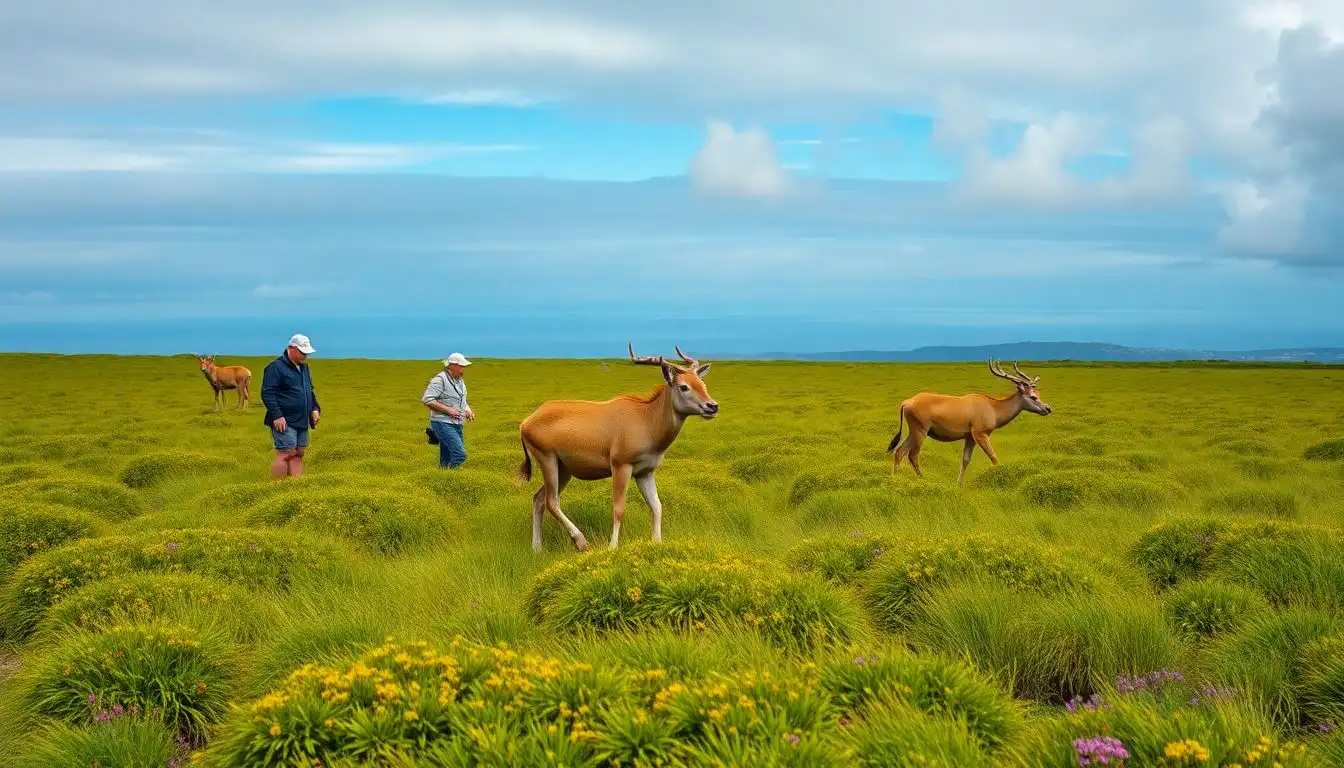
What they found was an island teeming with life, from the forest floor to the rocky shorelines. The lack of feral cats and foxes has allowed small mammals to roam freely, a sight that is becoming increasingly rare in other parts of the country.
Recording the Invisible Residents
The cameras captured thousands of images over several months, documenting the daily routines of the island’s residents. Many of the animals recorded are endemic to the region, meaning they are found nowhere else on Earth but these small pockets of Tasmanian wilderness.
One of the most exciting sightings included the Eastern Quoll, a carnivorous marsupial that has faced significant pressure from habitat loss and predators elsewhere. On this island, the population appears robust, with healthy individuals seen foraging through the leaf litter under the cover of darkness.
- When someone is outwardly cheerful but still feels deeply alone, psychologists say these 10 quiet behaviors often reveal the disconnect
- Psychology says the quiet rage many older men carry isn’t bitterness, it’s the accumulation of decades where expressing vulnerability would have cost them everything — their authority, their marriages, their self-respect — so they stored it as anger because anger was the only emotion their generation allowed men to keep
- Disability Pension Supplements of $1,600 Paid Before 1 April 2026 Nationwide
- Psychology says the reason most people never change their lives isn’t fear of failure – it’s that they’ve spent so long performing a version of themselves for other people that they genuinely can’t tell anymore which desires are actually theirs
- $480 Medicare Safety Net Reset: New Threshold Applies From 1 April 2026
“The density of wildlife on these predator-free islands is a testament to what an ecosystem can look like when historical balances are maintained. Seeing such high numbers of ground-dwelling birds and small marsupials in one frame is truly remarkable for modern conservation.”
The Importance of Predator-Free Havens
The success of the wildlife on this remote island highlights a critical lesson for Australian conservation efforts. Without the threat of introduced predators, native species can reach population densities that are simply not possible in suburban or agricultural settings.
This island acts as a natural ark, preserving genetic diversity that could be used to bolster populations in managed sanctuaries or mainland national parks. The data collected helps Tasmanian authorities understand which environments are most resilient to the changing climate and how best to protect them.
Short-tailed shearwaters were also seen in massive numbers, returning to their burrows after incredible migrations. These birds rely on the stability of these islands to raise their chicks, and the camera footage shows the intricate social dynamics within their sprawling colonies.
- Centrelink cash boost: Millions of Australians to receive Services Australia payment increase
- Psychology says people who grow apart from their family as they age aren’t cold or ungrateful – they’re often the ones who finally stopped performing a version of themselves that kept the peace but cost them their identity
- I’m 37 and I Just Realized I’ve Been Calling Myself an Introvert for Twenty Years When the Truth is I’m Just Exhausted From Spending My Entire Life Accommodating Other People’s Need for Constant Noise
- Psychologists say the bond between a person and the dog that sleeps in their bed isn’t comparable to human attachment. It’s actually more stable, because the dog never withdraws affection as punishment, never keeps score, and never makes closeness conditional on performance.
- I worked for 42 years, retired with more money than I ever imagined having, and by the third Wednesday of my new life I was reorganizing the garage at 10 a.m. just to feel like someone still expected something from me
Mapping the Flora and Fauna Interactions
Beyond the high-profile mammals, the survey provided insights into the relationship between the island’s unique vegetation and its animal inhabitants. The footage revealed how certain lizards and insects play a vital role in pollination and seed dispersal within this isolated scrubland.
The 1500-word study suggests that the island’s micro-climate provides a buffer against the heatwaves that occasionally plague the mainland. The dense canopy and sea mists keep the ground moist, supporting a layer of mosses and ferns that provide a perfect playground for skinks and endemic snails.
Comparing Island and Mainland Biodiversity
To understand the significance of these findings, it is helpful to look at how these remote populations compare to those in more accessible areas of Tasmania. The absence of competition for food and nesting sites leads to different behavioral patterns and higher survival rates for juveniles.
| Species Group | Island Observation Status | Mainland Threat Level |
|---|---|---|
| Small Marsupials | High Density / Active | High (Predation) |
| Ground-Nesting Birds | Stable Breeding | Moderate (Habitat Loss) |
| Endemic Reptiles | Widespread | Low to Moderate |
This data emphasizes that protecting these islands is not just about saving a single species, but about preserving an entire functional web of life. The biosecurity of these locations is paramount, as a single accidental introduction of a rat or cat could devastate the entire population in a matter of years.
- Psychology says the parents whose adult children gradually stop visiting aren’t usually the ones who were cruel or absent — they’re often the ones so focused on providing and protecting that they never learned to simply be company, and children grow up moving towards the people they feel easy with rather than the people they owe the most to
- Rent Assistance for Pensioners Climbs to $188.20 per Fortnight in 1 April 2026
- 43 Years Ago, Scientists Dropped Gophers Onto a Volcano. Today, They’re Tiny Heroes.
- Goodbye to Low Pension Payments: Australians Could Receive Over $1,178 From 1 April 2026
- Iran Strikes Australian Airbase as Gulf Attacks Escalate: Growing Tensions in the Region
Technological Triumphs in the Field
The success of this mission also celebrates the advancement of field technology. In the past, cameras were bulky and had short battery lives, but modern units can survive for months in salt-laden air and freezing temperatures.
Software advances have also allowed researchers to sift through thousands of “blank” photos—triggered by moving branches or grass—to find the genuine animal encounters. This artificial intelligence integration saves hundreds of manual labor hours, allowing biologists to focus on analyzing the results rather than just sorting data.
“Modern monitoring tools have bridged the gap between remote wilderness and scientific understanding. We can now gather years’ worth of ecological data in a single season without disturbing the very creatures we aim to study.”
Protecting the Future of the Island
While the results of the survey are overwhelmingly positive, they also serve as a reminder of the fragility of such ecosystems. The increasing frequency of storm surges and changes in ocean currents could impact the food sources that many of these animals rely on, particularly the seabirds.
- Low-Income Australians Eligible for $2,000 Relief as Applications Close 1 April 2026
- I’m 65 and the most frightening thing about losing my joy wasn’t losing it — it was how long it took me to notice it was gone, like a light that dims so slowly you keep thinking the room is fine until one day you can’t read anything anymore
- If You Want To Find True Inner Peace, Start Saying “no” to These 8 Things
- Centrelink Digital Payment System From 1 April 2026: Faster Benefit Deposits For Australians
- I bought my grandparents’ house and lived next to my mom. When she decided to move, it was hard on both of us.
Future monitoring will likely involve more frequent deployments to track long-term trends. By establishing a baseline now, researchers can identify if a population begins to dip and take action before it reaches a point of no return.
The local Tasmanian community has shown great interest in these findings, with many viewing the island as a symbol of the state’s rugged and enduring spirit. It serves as a beacon of hope, showing that when nature is left to its own devices, it possesses an incredible capacity for resilience.
Cultural and Ecological Heritage
The island also holds significance beyond its biological value. For the Aboriginal community, these landforms are part of a broader cultural landscape that has been cared for over tens of thousands of years. Integrating traditional knowledge with modern western science creates a more holistic approach to land management.
Understanding the historical movements of sea levels helps explain how these animals became stranded on these islands in the first place. They are living relics of a time when Tasmania was even more connected to its surrounding islets, now isolated by the rising waters of the Bass Strait.
- When someone is outwardly cheerful but still feels deeply alone, psychologists say these 10 quiet behaviors often reveal the disconnect
- Psychology says the quiet rage many older men carry isn’t bitterness, it’s the accumulation of decades where expressing vulnerability would have cost them everything — their authority, their marriages, their self-respect — so they stored it as anger because anger was the only emotion their generation allowed men to keep
- Disability Pension Supplements of $1,600 Paid Before 1 April 2026 Nationwide
- Psychology says the reason most people never change their lives isn’t fear of failure – it’s that they’ve spent so long performing a version of themselves for other people that they genuinely can’t tell anymore which desires are actually theirs
- $480 Medicare Safety Net Reset: New Threshold Applies From 1 April 2026
Summary of Key Findings
The first-ever camera survey has successfully cataloged a diverse range of species, many of which are thriving in the absence of human interference. The footage provides undeniable proof that remote islands are the frontline of Australian conservation efforts.
From the playful antics of quolls to the stoic presence of sea eagles, the island is a tapestry of life that demands our protection. As technology continues to evolve, we can expect even more secrets to be revealed from the deepest corners of the Tasmanian wilderness.
“Every time we look into a new corner of our natural world, we find that life is more interconnected and persistent than we previously imagined. These islands are not just rocks in the ocean; they are the heartbeats of our natural heritage.”
FAQs – First‑Ever Camera Survey of Remote Tasmanian Island
Why was this island chosen for the survey?
The island was selected because its rugged terrain made it inaccessible for traditional surveys. It was a blank spot on the ecological map, believed to be a pristine habitat free from invasive predators like foxes or feral cats.
- Centrelink cash boost: Millions of Australians to receive Services Australia payment increase
- Psychology says people who grow apart from their family as they age aren’t cold or ungrateful – they’re often the ones who finally stopped performing a version of themselves that kept the peace but cost them their identity
- I’m 37 and I Just Realized I’ve Been Calling Myself an Introvert for Twenty Years When the Truth is I’m Just Exhausted From Spending My Entire Life Accommodating Other People’s Need for Constant Noise
- Psychologists say the bond between a person and the dog that sleeps in their bed isn’t comparable to human attachment. It’s actually more stable, because the dog never withdraws affection as punishment, never keeps score, and never makes closeness conditional on performance.
- I worked for 42 years, retired with more money than I ever imagined having, and by the third Wednesday of my new life I was reorganizing the garage at 10 a.m. just to feel like someone still expected something from me
What types of animals were caught on camera?
The cameras filmed a variety of species, including the Eastern Quoll, various species of skinks, white-bellied sea eagles, and a significant population of short-tailed shearwaters. Many of these are rare or endangered in other regions.
How do the cameras work in such harsh conditions?
Researchers used specialized, weather-sealed motion-sensor cameras. These devices are designed to withstand high winds, salt spray, and heavy rain, and they can operate for several months on a single set of long-life batteries.
Is the island open to the public?
No, the island is a protected nature reserve with restricted access. This helps prevent the introduction of invasive species or diseases that could harm the delicate balance of the local ecosystem.
What are the next steps for the research team?
The team plans to analyze the population densities and compare them with data from other islands. They will also look at the impact of seasonal changes on animal behavior to better inform long-term conservation strategies for the region.
- Psychology says the parents whose adult children gradually stop visiting aren’t usually the ones who were cruel or absent — they’re often the ones so focused on providing and protecting that they never learned to simply be company, and children grow up moving towards the people they feel easy with rather than the people they owe the most to
- Rent Assistance for Pensioners Climbs to $188.20 per Fortnight in 1 April 2026
- 43 Years Ago, Scientists Dropped Gophers Onto a Volcano. Today, They’re Tiny Heroes.
- Goodbye to Low Pension Payments: Australians Could Receive Over $1,178 From 1 April 2026
- Iran Strikes Australian Airbase as Gulf Attacks Escalate: Growing Tensions in the Region
How does this survey help Australian wildlife as a whole?
It identifies safe havens where species are thriving. This knowledge can be used to improve conservation techniques on the mainland and provides a genetic roadmap for potential reintroduction programs in the future.