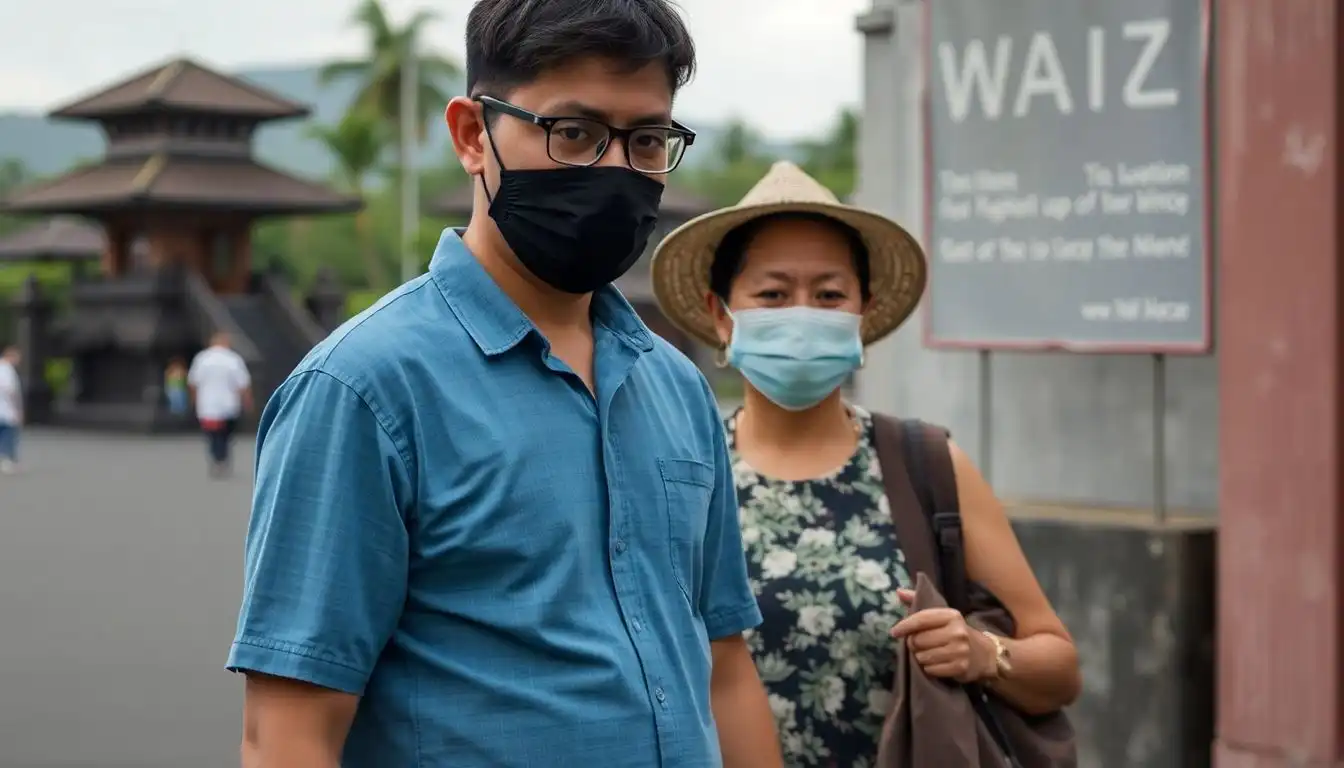
American Tourist Briefly Detained in Bali for Breaking ‘Day of Silence’ Rules: A holiday in the tropics took an unexpected turn this week when a traveller from the United States found themselves in hot water with local authorities. The incident occurred during Nyepi, the Balinese Day of Silence, after the tourist ignored strict cultural regulations that govern the entire island for a full 24-hour period.
Living every holidaymaker’s nightmare, the individual was stopped by traditional security guards while attempting to roam the streets of a popular coastal resort area. For many Aussies who frequent the “Island of the Gods,” this serves as a sobering reminder that local laws and spiritual customs are non-negotiable, even for those just passing through.
While Bali is often seen as a backyard playground for West Australians and East Coast sun-seekers alike, the sacred calendar carries immense weight. Breaking these rules doesn’t just result in a dirty look; it can lead to formal detention, hefty fines, and the involvement of immigration officials, making for an expensive and stressful end to a trip.
The Sacred Custom of Nyepi Explained
To understand why this American tourist faced such a stern response, one must grasp the significance of Nyepi. Known as the Hindu New Year, it is a day dedicated to self-reflection, fasting, and meditation. The logic is simple: by making the island appear deserted, evil spirits will be fooled into thinking no one is there and will move on, leaving Bali at peace for the coming year.
- Special Flight from Abu Dhabi Brings 101 Greeks & 45 Pets Home
- Centrelink Digital Payment System From 1 April 2026: Faster Benefit Deposits For Australians
- If You Want To Find True Inner Peace, Start Saying “no” to These 8 Things
- Goodbye to Low Pension Payments: Australians Could Receive Over $1,178 From 1 April 2026
- Psychology says people who grow apart from their family as they age aren’t cold or ungrateful – they’re often the ones who finally stopped performing a version of themselves that kept the peace but cost them their identity
During this time, the entire island shuts down. This isn’t like a quiet Sunday in a sleepy Aussie suburb; it is a total blackout. No planes fly in or out of the airport, no cars or scooters are allowed on the roads, and even the internet is often switched off. Lights must be kept low or extinguished entirely, and noise is strictly forbidden.
The rules apply to everyone physically present on the island, regardless of their religion or nationality. Whether you are a local resident in Denpasar or a tourist staying in a high-end villa in Seminyak, you are expected to stay within your accommodation. The streets are patrolled by the Pecalang, traditional community security guards dressed in distinct black and checkered sarongs.
“The cultural significance of the Day of Silence is the bedrock of Balinese identity. It is not a suggestion for visitors but a mandatory observance that maintains communal harmony. When tourists breach these boundaries, it is viewed as a deep sign of disrespect toward the local spirits and the community.”
Details of the Interaction with the Pecalang
The incident involving the American tourist unfolded when the individual was spotted walking along a main thoroughfare long after the blackout had begun. Despite clear warnings provided by hotels and local travel agencies, the visitor reportedly claimed they were unaware that they couldn’t leave their premises to find an open convenience store.
- Psychologists say the bond between a person and the dog that sleeps in their bed isn’t comparable to human attachment. It’s actually more stable, because the dog never withdraws affection as punishment, never keeps score, and never makes closeness conditional on performance.
- 43 Years Ago, Scientists Dropped Gophers Onto a Volcano. Today, They’re Tiny Heroes.
- First‑Ever Camera Survey of Remote Tasmanian Island Reveals Rare and Elusive Wildlife
- Psychology says the parents whose adult children gradually stop visiting aren’t usually the ones who were cruel or absent — they’re often the ones so focused on providing and protecting that they never learned to simply be company, and children grow up moving towards the people they feel easy with rather than the people they owe the most to
- I worked for 42 years, retired with more money than I ever imagined having, and by the third Wednesday of my new life I was reorganizing the garage at 10 a.m. just to feel like someone still expected something from me
The Pecalang intercepted the tourist near a well-known beach strip. Witnesses noted that the encounter was tense but remained non-violent. In Bali, these traditional guards have the authority to detain individuals until they can be handed over to the state police. The tourist was taken to a local community hall for questioning and to await further processing.
For many onlookers, the situation served as a stark contrast to the usual laid-back vibes of the island. Being detained in a foreign country is a daunting experience, especially when language barriers and different legal frameworks are involved. The tourist was eventually released after a few hours of questioning and a formal apology, though they remained under the watchful eye of local authorities for the remainder of their stay.
Consequences for Violating Traditional Laws
While this particular traveller was released relatively quickly, the consequences can often be much more severe. Indonesian authorities have been cracking down on disrespectful behaviour by foreigners over the last few years. This includes everything from inappropriate photos at sacred temples to working illegally on a tourist visa.
Violating Nyepi rules can lead to a range of sanctions. At a community level, “social fines” are often imposed, which might involve paying for a purification ceremony or providing offerings to the village. At a government level, the Indonesian Immigration Department has the power to deport any foreigner who is deemed to be disturbing the public order or disrespecting local customs.
- $480 Medicare Safety Net Reset: New Threshold Applies From 1 April 2026
- Low-Income Australians Eligible for $2,000 Relief as Applications Close 1 April 2026
- I’m 65 and the most frightening thing about losing my joy wasn’t losing it — it was how long it took me to notice it was gone, like a light that dims so slowly you keep thinking the room is fine until one day you can’t read anything anymore
- Tropical Cyclone Narelle Hits Far North Queensland: Residents Take Shelter as Storm Causes Destruction
- I bought my grandparents’ house and lived next to my mom. When she decided to move, it was hard on both of us.
Estimated Costs of Travel Violations in Indonesia
| Type of Violation | Common Penalty | Estimated Cost (AUD) |
|---|---|---|
| Minor Nyepi Breach | Community Fine / Apology | $100 – $500 |
| Visa Overstay | Daily Fine per person | $100 per day |
| Public Misconduct | Detention & Deportation | $2,000+ (plus flights) |
| Sacred Site Disrespect | Purification Fee & Fine | $500 – $1,500 |
Why Tourism Etiquette Matters for Australians
With Bali being just a short hop from Perth or Darwin, many Australians treat the island like a second home. This proximity sometimes leads to a sense of complacency regarding local laws. However, the recent detention of the American holidaymaker highlights that “ignorance of the law” is never a valid excuse in the eyes of Balinese officials.
Australian travellers are encouraged to do their homework before booking flights during the month of March, which is when the lunar-based Nyepi usually falls. While staying in a resort during the Day of Silence can be a peaceful and unique experience, it requires a willingness to stay indoors for 24 hours. If you are the type of person who needs a 2:00 am Macca’s run or a night out at a club, this is not the time for you to visit.
“Modern tourism requires a shift from passive consumption to active participation in local norms. Those who fail to adapt often find themselves at odds with the law. Respecting the silence is not just about avoiding a fine; it is about acknowledging the sovereignty of the host culture.”
Security Measures and the Role of the Pecalang
The Pecalang are the guardians of Balinese tradition. While they are not regular police officers, they carry significant weight within their villages. During Nyepi, they are the only people allowed on the streets, aside from emergency vehicles like ambulances. They monitor the darkness to ensure no light is escaping from windows and no people are wandering about.
- When someone is outwardly cheerful but still feels deeply alone, psychologists say these 10 quiet behaviors often reveal the disconnect
- Psychology says the reason most people never change their lives isn’t fear of failure – it’s that they’ve spent so long performing a version of themselves for other people that they genuinely can’t tell anymore which desires are actually theirs
- 3 New Thriller Movies to Watch on Netflix This Week (March 19–25)
- Disability Pension Supplements of $1,600 Paid Before 1 April 2026 Nationwide
- Rent Assistance for Pensioners Climbs to $188.20 per Fortnight in 1 April 2026
The detention of the American tourist was a textbook example of Pecalang protocol. They are trained to be firm but fair, ensuring that the spiritual vacuum of the day is maintained. If a tourist is found outside, they are usually escorted back to their hotel first. Detention only occurs if the individual is belligerent, refuses to comply, or repeatedly breaks the rules.
In this instance, the tourist reportedly argued about their right to move freely, which likely led to the decision to detain them. In Indonesia, asserting “individual rights” against a collective religious observance rarely ends well for the visitor. The local philosophy prioritises the spiritual wellbeing of the community over the convenience of a single tourist.
How to Prepare for Future Travels
If you are planning a trip to Bali, it is vital to check the calendar for significant holidays. Nyepi dates change every year because they follow the Saka lunar calendar. Most hotels will provide a notice in your room or at the reception desk explaining the restrictions, but the responsibility ultimately lies with the traveller.
Preparation is key. Ensure you have enough snacks, water, and books to last the full 24 hours. Most resorts will still serve food within their dining halls, but you won’t be allowed to step foot on the beach or the street. Even the lights in your room must be dimmed, and curtains must be drawn tight so no light flickers outside into the night sky.
- Special Flight from Abu Dhabi Brings 101 Greeks & 45 Pets Home
- Centrelink Digital Payment System From 1 April 2026: Faster Benefit Deposits For Australians
- If You Want To Find True Inner Peace, Start Saying “no” to These 8 Things
- Goodbye to Low Pension Payments: Australians Could Receive Over $1,178 From 1 April 2026
- Psychology says people who grow apart from their family as they age aren’t cold or ungrateful – they’re often the ones who finally stopped performing a version of themselves that kept the peace but cost them their identity
“The tension between holiday relaxation and local regulation is at an all-time high in popular destinations. Visitors should view these cultural milestones as an opportunity to disconnect rather than an inconvenience to their itinerary. Failure to do so can result in permanent bans from the country.”
FAQs – American Tourist Briefly Detained in Bali for Breaking ‘Day of Silence’ Rules
What exactly is Nyepi?
Nyepi is the Balinese Day of Silence, marking the start of the Hindu New Year. It is a day of spiritual cleansing where the entire island shuts down to trick evil spirits into thinking the island is uninhabited.
Can I leave my hotel during the Day of Silence?
No. Everyone on the island, including tourists, must stay within the grounds of their accommodation for the full 24-hour period. Walking on the streets or the beach is strictly prohibited and can lead to detention.
Does the airport stay open during Nyepi?
The Ngurah Rai International Airport in Bali closes for the entire 24 hours of Nyepi. No commercial flights arrive or depart, and the airspace over the island is cleared, with the exception of emergency medical evacuations.
- Psychologists say the bond between a person and the dog that sleeps in their bed isn’t comparable to human attachment. It’s actually more stable, because the dog never withdraws affection as punishment, never keeps score, and never makes closeness conditional on performance.
- 43 Years Ago, Scientists Dropped Gophers Onto a Volcano. Today, They’re Tiny Heroes.
- First‑Ever Camera Survey of Remote Tasmanian Island Reveals Rare and Elusive Wildlife
- Psychology says the parents whose adult children gradually stop visiting aren’t usually the ones who were cruel or absent — they’re often the ones so focused on providing and protecting that they never learned to simply be company, and children grow up moving towards the people they feel easy with rather than the people they owe the most to
- I worked for 42 years, retired with more money than I ever imagined having, and by the third Wednesday of my new life I was reorganizing the garage at 10 a.m. just to feel like someone still expected something from me
What happens if a tourist is caught breaking the rules?
A tourist caught outside will likely be stopped by the Pecalang. Depending on the severity of the incident, they may be escorted back to their hotel, fined, or detained for questioning by police and immigration officials.
Are lights and internet allowed during this time?
Inhabitants are asked to keep lights to a minimum and not let any light shine outside. Most cellular data providers and internet services are switched off across the island to encourage a day of total digital detox and silence.
Is Nyepi the same date every year?
No, the date changes annually based on the Balinese lunar calendar. It usually falls in March. Travellers should check the specific dates for the year they intend to visit to ensure they are prepared for the shutdown.
Do the rules apply to non-Hindus?
Yes. The regulations for Nyepi are provincial law in Bali and apply to every single person on the island, regardless of their personal religious beliefs or nationality.