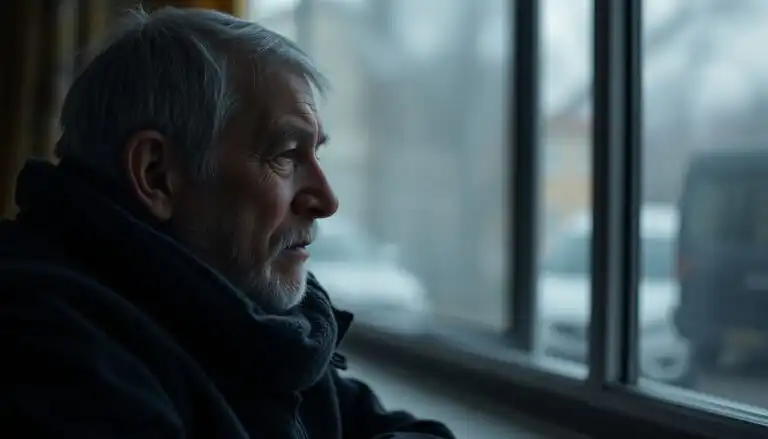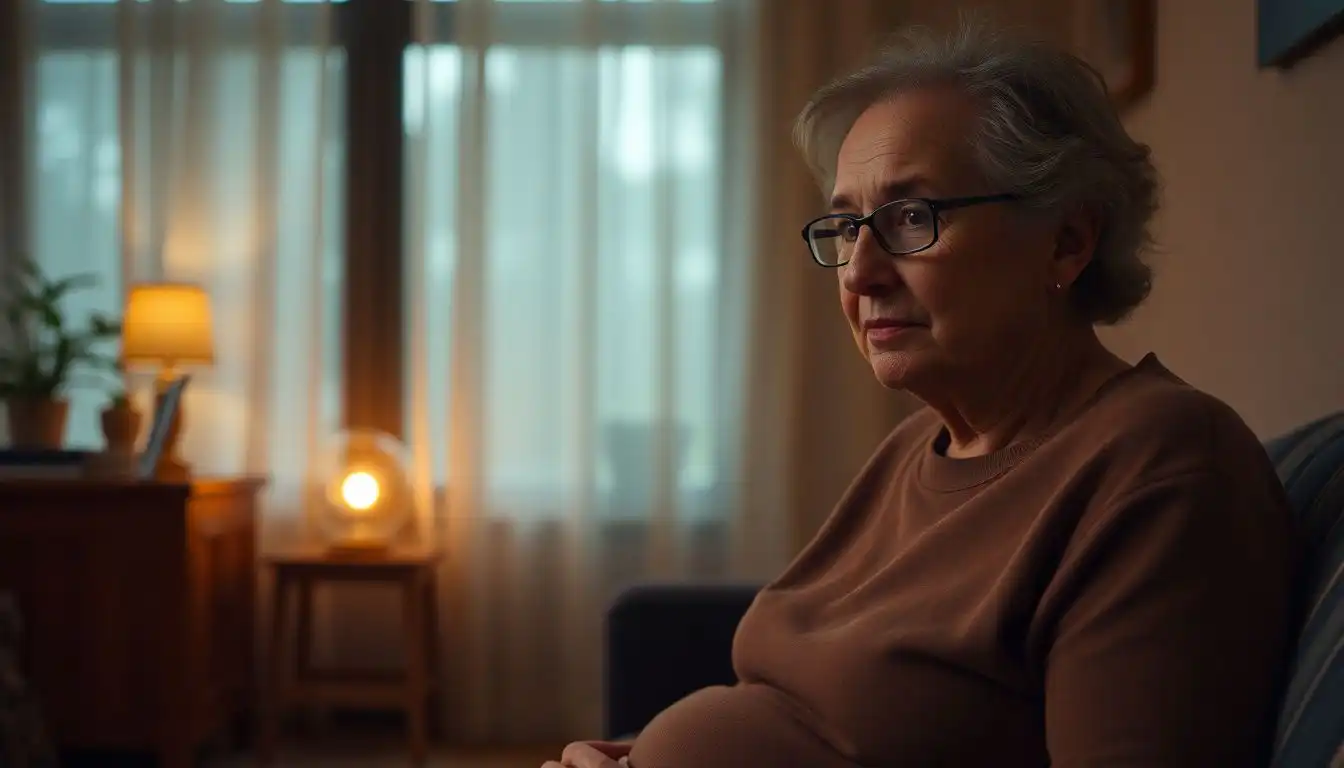
Losing my joy: It started with a subtle shift in the way the sunlight hit the veranda during my morning tea. At 65, I expected the physical creaks and the slower pace of a coastal retirement, but I didn’t expect the emotional erosion that followed.
The most frightening part wasn’t the absence of happiness itself, but the terrifyingly long time it took me to realise the spark had actually gone. It felt like a dimming light globe in a Federation-style hallway; the change is so gradual that your eyes keep adjusting until you are suddenly standing in total darkness.
For many older Australians, this “emotional dimming” remains an invisible epidemic that masquerades as the natural process of ageing. We mistake a lack of interest for “slowing down” and treat a heavy heart as just another symptom of getting older, much like a stiff knee or failing eyesight.
The Slow Fade of Emotional Vitality
The transition into your mid-sixties in Australia often marks a significant cultural shift. Whether it is the move toward Superannuation drawdowns or the transition from full-time work to “grey nomad” adventures, our society celebrates this era as the ultimate reward. Yet, when the reward feels hollow, we rarely speak up.
- If You Want To Find True Inner Peace, Start Saying “no” to These 8 Things
- Psychology says the parents whose adult children gradually stop visiting aren’t usually the ones who were cruel or absent — they’re often the ones so focused on providing and protecting that they never learned to simply be company, and children grow up moving towards the people they feel easy with rather than the people they owe the most to
- Psychologists say the bond between a person and the dog that sleeps in their bed isn’t comparable to human attachment. It’s actually more stable, because the dog never withdraws affection as punishment, never keeps score, and never makes closeness conditional on performance.
- I worked for 42 years, retired with more money than I ever imagined having, and by the third Wednesday of my new life I was reorganizing the garage at 10 a.m. just to feel like someone still expected something from me
- Psychology says the reason most people never change their lives isn’t fear of failure – it’s that they’ve spent so long performing a version of themselves for other people that they genuinely can’t tell anymore which desires are actually theirs
I spent months thinking I was just tired from the humidity or perhaps just “settling in” to a quieter life. I kept telling myself the room was fine, even as I stopped reaching for my books, stopped calling friends for a catch-up at the local club, and found the Great Ocean Road views less inspiring than they once were.
This gradual decline is often referred to by experts as “anhedonia”—the inability to feel pleasure. Unlike a sharp, sudden grief, it is a slow theft of colour. You don’t wake up one day feeling miserable; you simply wake up one day and realise you haven’t felt truly excited in a year.
“The gradual loss of emotional resonance in later life is often misdiagnosed as simple fatigue. Because the decline occurs over months or years, the individual’s brain adapts to a lower baseline of stimulation, making the absence of joy feel like a normal state of being.”
The Cultural Barrier to Seeking Help
In Australia, there is a lingering “stiff upper lip” mentality among the over-sixties. We are the generation raised by those who endured the hardest times, and we pride ourselves on our resilience and “no worries” attitude. Admitting that the world feels grey can feel like a betrayal of that national identity.
- If You Want To Find True Inner Peace, Start Saying “no” to These 8 Things
- Psychology says the parents whose adult children gradually stop visiting aren’t usually the ones who were cruel or absent — they’re often the ones so focused on providing and protecting that they never learned to simply be company, and children grow up moving towards the people they feel easy with rather than the people they owe the most to
- Psychologists say the bond between a person and the dog that sleeps in their bed isn’t comparable to human attachment. It’s actually more stable, because the dog never withdraws affection as punishment, never keeps score, and never makes closeness conditional on performance.
- I worked for 42 years, retired with more money than I ever imagined having, and by the third Wednesday of my new life I was reorganizing the garage at 10 a.m. just to feel like someone still expected something from me
- Psychology says the reason most people never change their lives isn’t fear of failure – it’s that they’ve spent so long performing a version of themselves for other people that they genuinely can’t tell anymore which desires are actually theirs
We are often surrounded by the imagery of the “perfect” Aussie retirement—active, sun-drenched, and socially vibrant. If your reality doesn’t match the brochure, the shame can be isolating. You begin to mask your indifference, nodding along at Sunday roasts while feeling entirely disconnected from the conversation.
This masking is exactly why it takes so long to notice the joy is gone. By pretending to be okay for the sake of the grandkids or the neighbours, you effectively lie to yourself. You convince your conscious mind that the light is still bright enough to see by, even when you are stumbling over the furniture of your own life.
Data on Wellbeing in Later Life
While many believe the “golden years” are the happiest, the statistics on emotional health for those reaching retirement age show a complex picture. The following table highlights the self-reported levels of life satisfaction shifts across different age brackets in the local context.
| Age Bracket | Reported High Life Satisfaction (%) | Frequency of Loneliness (%) | Time Spent in Social Activities (Weekly) | ||||
|---|---|---|---|---|---|---|---|
| 55–64 | 74% | 12% | 14.5 Hours | 65–74 | 68% | 19% | 11.2 Hours |
| 75+ | 62% | 24% | 8.4 Hours |
Recognising the Symptoms of the Dimming
It wasn’t a doctor who pointed out my change, but a simple observation regarding my garden. I live in an area where the bottlebrush and wattle bloom with aggressive vibrance. For thirty years, the first yellow blossom was a highlight of my year. When I realised I had walked past them for three weeks without even looking up, the alarm bells finally rang.
- If You Want To Find True Inner Peace, Start Saying “no” to These 8 Things
- Psychology says the parents whose adult children gradually stop visiting aren’t usually the ones who were cruel or absent — they’re often the ones so focused on providing and protecting that they never learned to simply be company, and children grow up moving towards the people they feel easy with rather than the people they owe the most to
- Psychologists say the bond between a person and the dog that sleeps in their bed isn’t comparable to human attachment. It’s actually more stable, because the dog never withdraws affection as punishment, never keeps score, and never makes closeness conditional on performance.
- I worked for 42 years, retired with more money than I ever imagined having, and by the third Wednesday of my new life I was reorganizing the garage at 10 a.m. just to feel like someone still expected something from me
- Psychology says the reason most people never change their lives isn’t fear of failure – it’s that they’ve spent so long performing a version of themselves for other people that they genuinely can’t tell anymore which desires are actually theirs
One major symptom is the “sameness” of days. When joy exits the room, time loses its texture. Monday feels identical to Thursday because there is nothing to look forward to and nothing to reflect on with warmth. You aren’t necessarily sad; you are just profoundly neutral.
Another sign is the withdrawal from “micro-joys.” This includes the small Australian rituals we take for granted, like a meat pie at the footy, the smell of rain on hot bitumen, or the sound of kookaburras at dawn. If these things no longer elicit a reaction, the light has dimmed significantly.
“Social isolation in the Australian suburbs can accelerate emotional decline. When individuals lose the incidental interactions found in the workplace, they often fail to replace them with meaningful alternatives, leading to a slow-onset emotional numbing that goes unnoticed by family.”
The Biological and Environmental Intersection
At 65, our bodies undergo biochemical changes that can impact our mood. Reductions in dopamine and serotonin are common, yet we often attribute the resulting lethargy to “getting old.” It is vital to distinguish between physical slowing and emotional dying.
- If You Want To Find True Inner Peace, Start Saying “no” to These 8 Things
- Psychology says the parents whose adult children gradually stop visiting aren’t usually the ones who were cruel or absent — they’re often the ones so focused on providing and protecting that they never learned to simply be company, and children grow up moving towards the people they feel easy with rather than the people they owe the most to
- Psychologists say the bond between a person and the dog that sleeps in their bed isn’t comparable to human attachment. It’s actually more stable, because the dog never withdraws affection as punishment, never keeps score, and never makes closeness conditional on performance.
- I worked for 42 years, retired with more money than I ever imagined having, and by the third Wednesday of my new life I was reorganizing the garage at 10 a.m. just to feel like someone still expected something from me
- Psychology says the reason most people never change their lives isn’t fear of failure – it’s that they’ve spent so long performing a version of themselves for other people that they genuinely can’t tell anymore which desires are actually theirs
Environmental factors in Australia also play a role. The sheer vastness of our country and the design of our suburbs can lead to “urban loneliness.” If you are no longer driving as much or if your friends have “downsized” to different regions, your social net thins out. This thinning happens so slowly that you don’t notice the holes until you fall through one.
The cost of living can also weigh heavily on the mind of a retiree. Constant talk about interest rates and the price of electricity can create a background hum of anxiety. This noise is loud enough to drown out the quiet signals of joy, making it even harder to notice when they have vanished entirely.
Reclaiming the Light
Realising the light is gone is the most painful part, but it is also the only way to find the switch. For me, it required a deliberate “audit” of my emotions. I had to stop saying “I’m fine” and start asking “When was the last time I laughed until my stomach ached?”
Reconnecting with joy doesn’t require a massive life overhaul. It often starts with small, intentional acts. Joining a Men’s Shed, volunteering at a local op-shop, or even just sitting in a different park can disrupt the pattern of neutrality. You have to force your eyes to look for the light again.
- If You Want To Find True Inner Peace, Start Saying “no” to These 8 Things
- Psychology says the parents whose adult children gradually stop visiting aren’t usually the ones who were cruel or absent — they’re often the ones so focused on providing and protecting that they never learned to simply be company, and children grow up moving towards the people they feel easy with rather than the people they owe the most to
- Psychologists say the bond between a person and the dog that sleeps in their bed isn’t comparable to human attachment. It’s actually more stable, because the dog never withdraws affection as punishment, never keeps score, and never makes closeness conditional on performance.
- I worked for 42 years, retired with more money than I ever imagined having, and by the third Wednesday of my new life I was reorganizing the garage at 10 a.m. just to feel like someone still expected something from me
- Psychology says the reason most people never change their lives isn’t fear of failure – it’s that they’ve spent so long performing a version of themselves for other people that they genuinely can’t tell anymore which desires are actually theirs
It is also important to seek professional guidance. GPs in Australia are increasingly trained to look past the physical complaints of seniors to find the underlying emotional state. There is no shame in admitting that the light has gone out; the only tragedy is staying in the dark when there are ways to brighten the room again.
“The recovery of joy in older adults is not about returning to the high-energy happiness of youth. It is about restoring the capacity for appreciation and engagement with one’s current environment, ensuring that the final third of life is lived with presence rather than just persistence.”
The Importance of Social Connectivity
The “lonely road” is a common theme in Australian folklore, but it shouldn’t be the reality of our senior years. Connection is the fuel that keeps the light burning. A simple flat white at a local cafe with a friend can do more for the soul than any supplement or “anti-ageing” cream.
We must challenge the cultural narrative that 65 is the beginning of the end. It should be seen as a new chapter with different, perhaps more subtle, colours. By talking openly about the slow fade of joy, we give others permission to check their own lights and ensure they aren’t living in a dimming world without knowing it.
- If You Want To Find True Inner Peace, Start Saying “no” to These 8 Things
- Psychology says the parents whose adult children gradually stop visiting aren’t usually the ones who were cruel or absent — they’re often the ones so focused on providing and protecting that they never learned to simply be company, and children grow up moving towards the people they feel easy with rather than the people they owe the most to
- Psychologists say the bond between a person and the dog that sleeps in their bed isn’t comparable to human attachment. It’s actually more stable, because the dog never withdraws affection as punishment, never keeps score, and never makes closeness conditional on performance.
- I worked for 42 years, retired with more money than I ever imagined having, and by the third Wednesday of my new life I was reorganizing the garage at 10 a.m. just to feel like someone still expected something from me
- Psychology says the reason most people never change their lives isn’t fear of failure – it’s that they’ve spent so long performing a version of themselves for other people that they genuinely can’t tell anymore which desires are actually theirs
If you find yourself staring at a world that seems to have lost its lustre, take heart. The fact that you noticed the darkness is proof that you still remember what the light looks like. That memory is the first step back to finding your spark in the sunburnt country we call home.
FAQs – Losing joy in later life
Why does losing joy happen so slowly?
The brain is remarkably good at adapting to gradual changes. Just as you don’t notice a child growing taller day by day, you don’t notice your mood dipping by a fraction of a percent each week until the cumulative effect becomes overwhelming.
Is this the same as clinical depression?
While they can overlap, the “dimming” of joy is often more about apathy and a lack of engagement than the intense sadness associated with depression. However, if left unaddressed, it can certainly develop into a more serious clinical condition.
How can I tell the difference between being tired and losing my joy?
Physical tiredness is usually resolved by rest. If you wake up after a full night’s sleep and still feel no interest in the things you used to love, it is likely an emotional issue rather than a physical one.
- If You Want To Find True Inner Peace, Start Saying “no” to These 8 Things
- Psychology says the parents whose adult children gradually stop visiting aren’t usually the ones who were cruel or absent — they’re often the ones so focused on providing and protecting that they never learned to simply be company, and children grow up moving towards the people they feel easy with rather than the people they owe the most to
- Psychologists say the bond between a person and the dog that sleeps in their bed isn’t comparable to human attachment. It’s actually more stable, because the dog never withdraws affection as punishment, never keeps score, and never makes closeness conditional on performance.
- I worked for 42 years, retired with more money than I ever imagined having, and by the third Wednesday of my new life I was reorganizing the garage at 10 a.m. just to feel like someone still expected something from me
- Psychology says the reason most people never change their lives isn’t fear of failure – it’s that they’ve spent so long performing a version of themselves for other people that they genuinely can’t tell anymore which desires are actually theirs
What are some local Australian resources for help?
You should start by speaking with your local GP for a General Practice Management Plan. Community centres, walking groups, and organisations like the CWA or Men’s Sheds are also excellent for rebuilding social joy.
Can my diet or the Australian climate affect my mood?
Sunlight is generally good for Victorian or Tasmanian residents who might suffer from seasonal shifts, but extreme heat in the northern states can lead to isolation as people stay indoors. A balanced diet rich in Omega-3s is also recommended for brain health.
How do I talk to my family about this without worrying them?
Be honest but clear. Explain that you aren’t “unhappy” in the traditional sense, but that you have noticed things aren’t as bright as they used to be. Framing it as a desire to “get your spark back” makes it a proactive conversation rather than a distressing one.