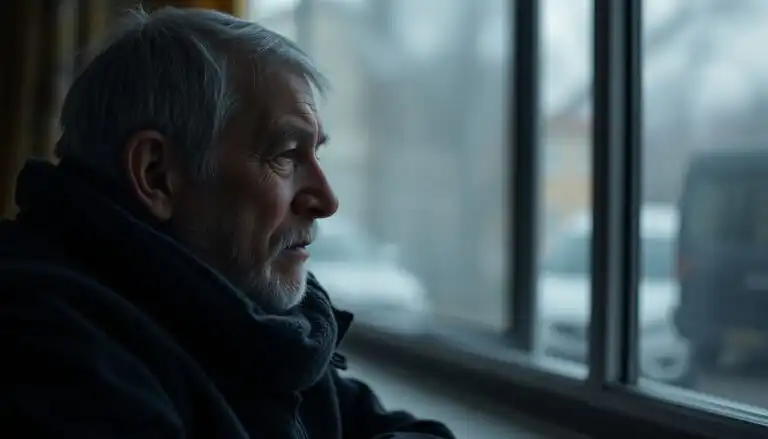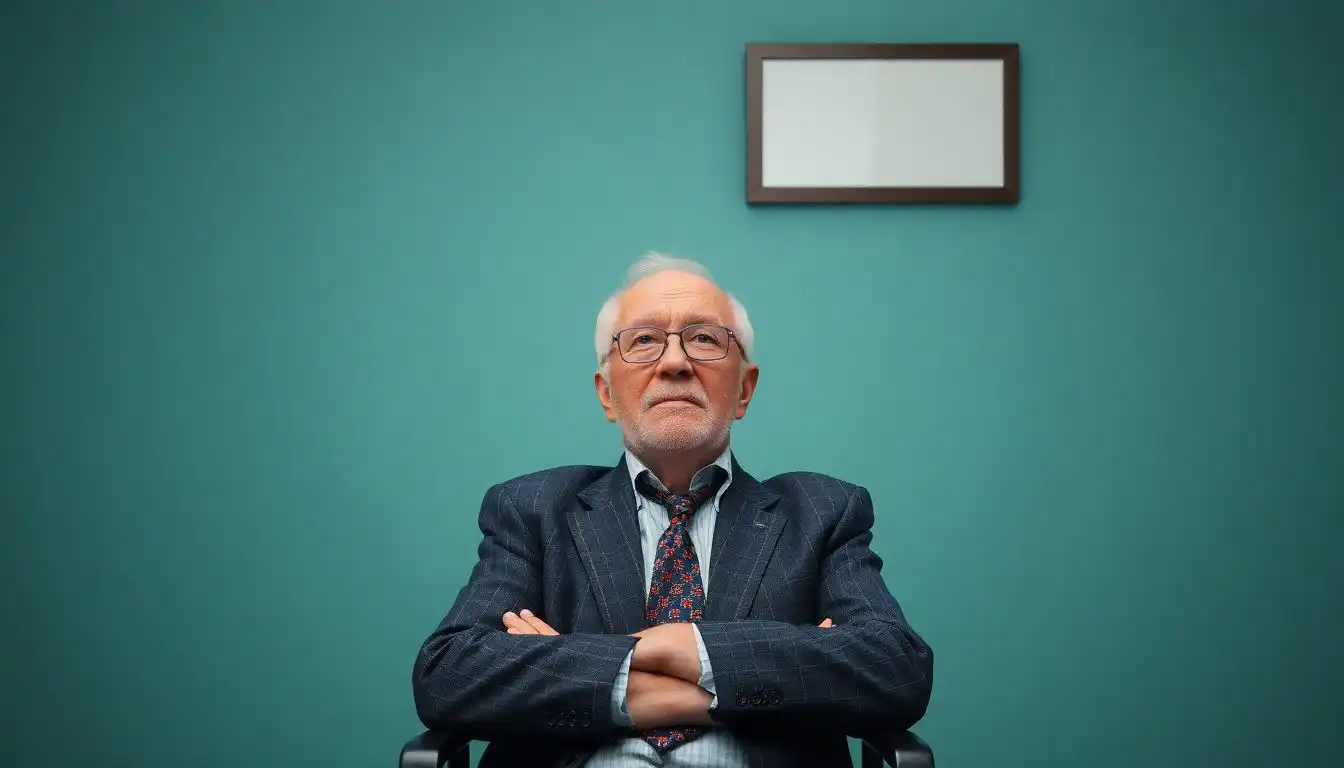
I’m 66 and I’ve been retired for four years: and the strangest part isn’t the boredom or the money or the free time — it’s that I finally have space to think and I’m realizing I don’t actually like the person I built my entire career around becoming.
Transitioning into life after work is often framed as a dream of endless golf at Sunshine Coast resorts or grey nomad adventures across the Nullarbor. For many Australians, the reality of hitting 60-plus involves a much deeper, more unsettling internal shift that has nothing to do with Superannuation balances.
After decades of climbing the corporate ladder and defining success by a title on a business card, the silence of retirement can act as a mirror. For those of us who spent forty years crafting a professional persona to survive the office environment, the person staring back in that mirror can feel like a total stranger.
The Mirage of Professional Identity
During my years in the workforce, I was the quintessential “achiever.” I wore the suits, took the red-eye flights to Sydney, and spoke in the clipped, decisive tones of someone who had all the answers. I thought I was building a legacy, but I was actually building a cage.
- 43 Years Ago, Scientists Dropped Gophers Onto a Volcano. Today, They’re Tiny Heroes.
- Psychology says the parents whose adult children gradually stop visiting aren’t usually the ones who were cruel or absent — they’re often the ones so focused on providing and protecting that they never learned to simply be company, and children grow up moving towards the people they feel easy with rather than the people they owe the most to
- Centrelink Recipients Urged to Claim Part of $475 Million Payout as Robodebt Deadline Arrives Tomorrow
- Psychology says people who grow apart from their family as they age aren’t cold or ungrateful – they’re often the ones who finally stopped performing a version of themselves that kept the peace but cost them their identity
- $1,178 Centrelink Age Pension in 2026 – What The Increase Means For Australian Seniors
In Australia, our culture often values the “larrikin” spirit, yet we demand a high level of conformity in our professional sectors. To get ahead, I suppressed my natural curiosity and my softer edges. I traded my hobbies for networking events and my weekends for “recovering” from the 38-hour week that actually took 60 hours.
The result was a highly efficient, highly respected professional who was, quite frankly, a bit of a bore. I became someone who measured life in KPIs rather than experiences. Now that the emails have stopped and the phone is quiet, I am left with the remains of a personality constructed solely to please shareholders.
The Psychological Cost of the “Work Persona”
Retirement is the ultimate disruptor because it removes the external validation we rely on for decades. Without a team to manage or a project to oversee, the ego begins to starve. This is when the uncomfortable realisations begin to surface about who we became just to stay employed.
Many Australians find that their social circles were tied entirely to their industry. When you stop being “the Director” or “the Manager,” you realise your friendships were often just situational conveniences. This leaves a void that isn’t easily filled by a morning walk or a trip to Bunnings.
- American Tourist Briefly Detained in Bali for Breaking ‘Day of Silence’ Rules
- Psychology says the reason most people never change their lives isn’t fear of failure – it’s that they’ve spent so long performing a version of themselves for other people that they genuinely can’t tell anymore which desires are actually theirs
- Goodbye Centrelink Top-Ups as Simple Error Triggers $3,200 Payment Loss
- The People Who Stay Kind After Being Hurt Aren’t Soft — They’re the Most Structurally Complex People in Any Room, Because They’re Holding Two Truths at The Same Time: That The World Can Be Brutal and That They Refuse to Be, and The Energy Required to Hold Both of Those without Collapsing Into One Is a Weight that Nobody Sees Because It Looks Like Ease
- Centrelink Digital Payment System From 1 April 2026: Faster Benefit Deposits For Australians
“The transition to retirement often triggers a profound identity crisis because the professional mask becomes fused to the face. When the mask is finally removed, the individual may find that their authentic passions and traits have been dormant for so long they no longer recognise them.”
Retirement Statistics and the Australian Reality
The financial side of retirement is frequently discussed, but the mental health aspect is often overlooked. We spend years planning our Account-Based Pension strategies but virtually no time planning our “identity strategy.”
| Retirement Factor | Impact Level | Common Australian Experience |
|---|---|---|
| Financial Security | High | Reliance on Super and the Age Pension. |
| Social Connection | Very High | Loss of daily workplace interaction and “water cooler” chat. |
| Sense of Purpose | Critical | Difficulty finding meaning outside of traditional productivity. |
| Self-Reflection | Rising | Increased time leading to deep reassessment of life choices. |
The Guilt of the Empty Calendar
One of the hardest habits to break is the feeling that every hour must be productive. In the early stages of my retirement, I felt a simmering guilt every time I sat on the veranda doing nothing. I felt like I was failing a performance review that no longer existed.
This guilt stems from the person I chose to become—a person who viewed rest as the enemy. I had internalised the Australian work ethic to such an extreme that I forgot how to simply exist. The person I built was a machine designed for output, but a human being is designed for connection and reflection.
- When someone is outwardly cheerful but still feels deeply alone, psychologists say these 10 quiet behaviors often reveal the disconnect
- Disability Pension Supplements of $1,600 Paid Before 1 April 2026 Nationwide
- Psychologists say the bond between a person and the dog that sleeps in their bed isn’t comparable to human attachment. It’s actually more stable, because the dog never withdraws affection as punishment, never keeps score, and never makes closeness conditional on performance.
- I bought my grandparents’ house and lived next to my mom. When she decided to move, it was hard on both of us.
- Children Who Were Praised for Being Helpful and Easy Often Become Adults Who Are Remarkably Kind and Deeply Lonely at The Same Time – Because They Learned that Being Low-Maintenance Was how You Earned Love, and Now They Can’t Ask for What They Need without Feeling Like a Burden
I look back at the way I treated people when I was “busy” and I don’t like what I see. I was impatient, dismissive of those I deemed less “driven,” and constantly checking my watch. That version of me was successful in the CBD, but he’s not someone I’d want to grab a beer with today.
Rediscovering the Authentic Self
Unlearning forty years of corporate programming is not a weekend project. It requires a deliberate effort to peel back the layers of the professional “brand” we created. For me, this has meant returning to the things I loved before I cared about my LinkedIn profile.
I’ve started gardening, not for the aesthetic of the house, but for the feel of the Aussie soil. I’ve started reading fiction again, something I dismissed as a waste of time when I was “building my career.” These small acts are helping me find the person I was before the corporate world got its hands on me.
“Retirees frequently report a sense of grief for the person they might have been had they not prioritised career advancement. This ‘identity mourning’ is a necessary step toward building a genuine lifestyle in the senior years.”
Also Read
- 3 New Thriller Movies to Watch on Netflix This Week (March 19–25)
- Psychology Says the Moment You Stop Trying to Become Your “best Self” and Start Accepting Your Actual Self Is the Moment Most People Describe as The Turning Point – Not Because They Gave up But Because They Finally Stopped Performing for An Audience that Was Never Going to Approve of Them Anyway
- Rent Assistance for Pensioners Climbs to $188.20 per Fortnight in 1 April 2026
- Centrelink cash boost: Millions of Australians to receive Services Australia payment increase
- Psychology says the quiet rage many older men carry isn’t bitterness, it’s the accumulation of decades where expressing vulnerability would have cost them everything — their authority, their marriages, their self-respect — so they stored it as anger because anger was the only emotion their generation allowed men to keep
The Loneliness of the Self-Realisation
There is a specific kind of loneliness that comes with realising you don’t like your past self. You can’t go back and change how you spent those decades. You can’t reclaim the nights you missed with your family because you were stuck in a boardroom in Melbourne.
However, there is also an incredible freedom in this honesty. Acknowledging that the “work me” was a hollow shell allows the “real me” to finally breathe. It’s about shifting the focus from what I have achieved to who I am.
In Australia, we often talk about the “Fair Go,” but we rarely give ourselves a fair go when it comes to self-forgiveness. We judge our past selves by our current wisdom, which is a losing game. The goal now is to spend the next twenty or thirty years being someone I actually respect.
Building a New Legacy
Legacy isn’t about the size of your Super balance or the title on your retirement plaque. It’s about the quality of your presence. Now, when I talk to my grandkids, I try to be fully there, rather than half-thinking about a spreadsheet or a budget meeting.
- Special Flight from Abu Dhabi Brings 101 Greeks & 45 Pets Home
- Australia Age Pension Increase 2026 Guide
- I worked for 42 years, retired with more money than I ever imagined having, and by the third Wednesday of my new life I was reorganizing the garage at 10 a.m. just to feel like someone still expected something from me
- Psychology Says the Loneliest Part of High Intelligence Isn’t Being Misunderstood — It’s Watching People You Care About Make Decisions You Can See Will Hurt Them and Knowing that Explaining Why Won’t Help Because the Gap Isn’t in Information, It’s in How You Process Consequences Six Moves Ahead While They’re Still on Move One
- Tropical Cyclone Narelle Hits Far North Queensland: Residents Take Shelter as Storm Causes Destruction
This new person I am becoming is much slower. He is more observant. He cares more about the local birds in the backyard than the national GDP. He is far less impressive on paper, but he is much more comfortable in his own skin.
“The successful modern retirement is not measured by the absence of work, but by the presence of self-awareness. Moving from a mindset of ‘doing’ to a state of ‘being’ is the final and most difficult promotion a worker will ever face.”
The Importance of New Boundaries
One of the strangest adjustments has been setting boundaries with my old self. When I feel that familiar urge to over-schedule my day or turn a hobby into a “side hustle,” I have to stop and remind myself that the “Hustle King” is retired. He doesn’t live here anymore.
Living in a coastal town means I see a lot of people my age trying to stay “busy” to avoid the same realisations I’ve had. They join every committee and run every local group with the same frantic energy they used in the office. They are still running away from the silence.
- I’m 66 and I Finally Understand that My Father’s Anger when I Came Home Late Wasn’t About Rules — It Was About the 45 Minutes He Spent at The Window Imagining Every Possible Version of What Might Have Happened, and By the Time I Walked Through the Door His Nervous System Had Processed so Many Catastrophic Simulations that The Relief Arrived as Fury Because His Body Didn’t Have a Calmer Way to Discharge the Accumulation
- Centrelink New Payment Schedule 2026: What The Updated System Means For Australians
- 2 Aircraft Carriers Down, 1 Breaking Apart: The U.S. Navy Is Running Out of Supercarriers During the Iran War
- $480 Medicare Safety Net Reset: New Threshold Applies From 1 April 2026
- First‑Ever Camera Survey of Remote Tasmanian Island Reveals Rare and Elusive Wildlife
I’ve decided to embrace the silence instead. In that quiet space, I am learning to like the man who doesn’t have a plan for Tuesday. I am learning that it is okay to be “unproductive” by the standards of the Australian economy.
Advice for the Soon-to-Retire
If you are approaching the end of your career, don’t just look at the numbers. Look at the man or woman you see in the mirror. Ask yourself if that person exists outside of the professional environment. If the answer is no, start planting the seeds of your real self now.
Don’t wait until the day you hand in your security pass to wonder who you are. Find a hobby that has nothing to do with your job. Make friends who don’t know what you do for a living. Practice being a human being rather than a human doing.
The four years I’ve spent in retirement have been the most challenging of my life, not because of money, but because of the internal audit I had to conduct. It turns out that the person I built my career around was just a character I played. Now, the play is over, and I finally get to be the audience.
- If You Want To Find True Inner Peace, Start Saying “no” to These 8 Things
- Research Suggests People Who Shower at Night Instead of In the Morning Aren’t Just Washing Off the Day — They’re Running a Neurological Closing Ritual that Signals the Nervous System the Threat Window Has Ended, and The Water Isn’t Cleaning the Body, It’s Decommissioning a Surveillance State That’s Been Active Since They Opened Their Eyes
- Being in Your Late 30s and Suddenly Understanding Why Your Parents Stopped Having Hobbies Isn’t Depressing — It’s the Moment You Realize that The Gap Between Having Interests and Having the Energy to Pursue Them Is a Gap that Parenthood Fills with Something that Isn’t Quite Sacrifice and Isn’t Quite Choice, and Naming It Would Require a Word that Doesn’t Exist Yet
- Nobody Warns You that The Fakest People You’ll Ever Meet Won’t Be the Obvious Ones – They’ll Be the Ones Who Remember Your Birthday, Ask About Your Kids, and Make You Feel Seen Right up Until the Moment Their Kindness Stops Being Useful to Them
- Low-Income Australians Eligible for $2,000 Relief as Applications Close 1 April 2026
FAQs – Retirement and Identity Shift
Why is the loss of professional identity so hard for Australians?
Many Australians tie their self-worth to their contribution to the workforce and the “provide for the family” mentality. When this role ends, it can feel like a loss of purpose or social standing within the community.
Is it normal to feel like I don’t know myself after retiring?
Yes, it is very common. Decades of “professionalism” often require suppressing personal traits. Once the pressure of work is removed, it takes time for those original personality traits to resurface.
How can I prepare for the emotional side of retirement?
Start by diversifying your identity before you leave work. Engage in volunteer work, join local clubs, or pursue interests that have no connection to your professional skill set or industry.
Does a large Superannuation balance make the transition easier?
While money reduces stress regarding bills and healthcare, it does not solve the identity crisis. In fact, more money can sometimes provide more “empty” time, making the need for a sense of self even more urgent.
- I’m 37 and I Just Realized I’ve Been Calling Myself an Introvert for Twenty Years When the Truth is I’m Just Exhausted From Spending My Entire Life Accommodating Other People’s Need for Constant Noise
- 9 Things People with Genuinely High Social Intelligence Never Do in A Conversation — and The One that Separates Them Most Clearly from People Who Are Merely Charming Is Something so Subtle that Most People Have Never Consciously Noticed It Happening
- I’m 65 and the most frightening thing about losing my joy wasn’t losing it — it was how long it took me to notice it was gone, like a light that dims so slowly you keep thinking the room is fine until one day you can’t read anything anymore
- Goodbye to Low Pension Payments: Australians Could Receive Over $1,178 From 1 April 2026
- $845 Age Pension Hike in April 2026: What Centrelink’s Latest Changes Mean for Pensioners
What can I do if I find I don’t like my “work persona”?
Practice self-compassion. Understand that the person you became was likely a survival mechanism for a competitive environment. Focus on small, daily actions that align with your current values rather than your old career goals.
How long does it typically take to adjust to this new phase?
Most people find that the first 12 to 24 months are the “honeymoon” phase, followed by a period of reassessment. Finding a true sense of a new self can take three to five years of consistent effort.