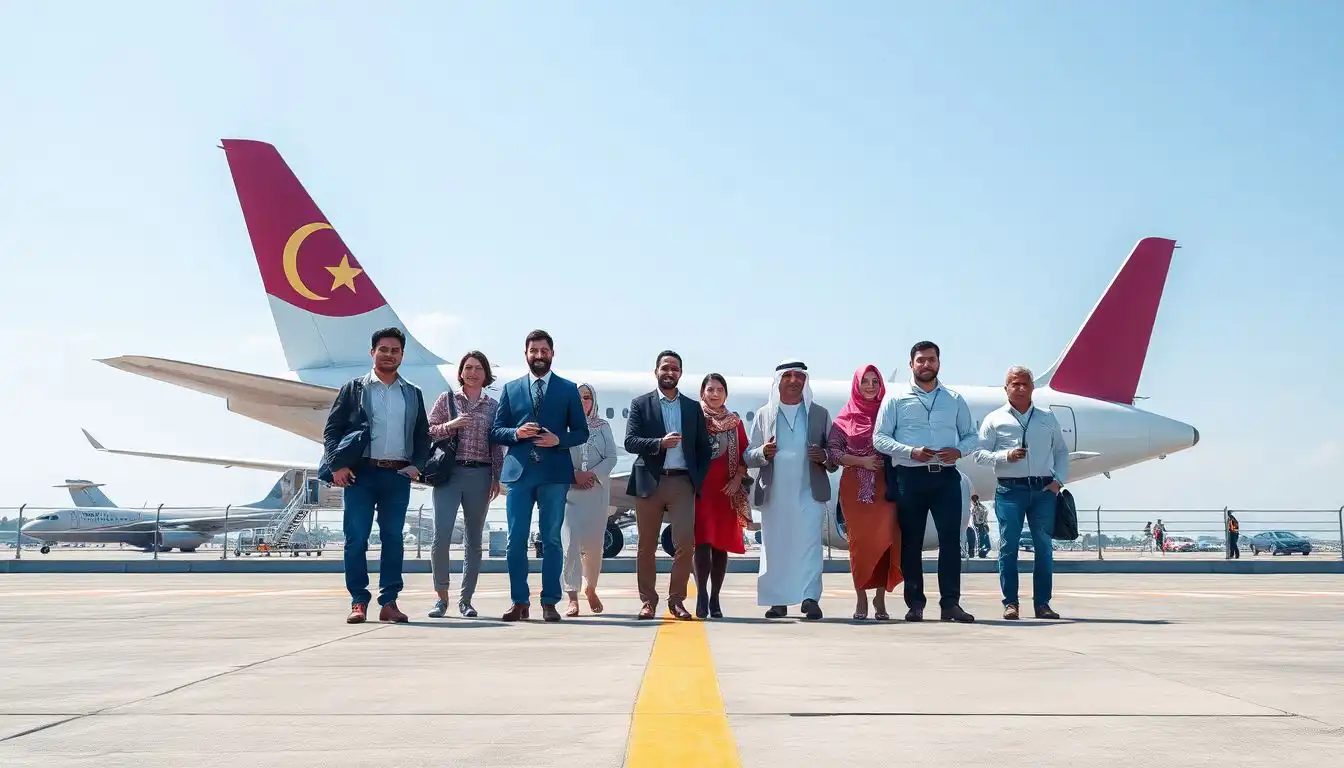
Malaysia Joins Israel, Iraq, Jordan, Qatar, Bahrain, Kuwait, Uae, Saudi Arabia, and Syria to Overcome Mobility Issues in Collaboration with Global Aviation and Tourism Authorities: A massive shift in international travel dynamics is currently unfolding as major nations across South East Asia and the Middle East unite to streamline border crossings. This unprecedented movement aims to dismantle the bureaucratic hurdles that have long frustrated Aussie travellers heading overseas for business or leisure.
By aligning with global aviation bodies, these nations are moving toward a frictionless transit model that could redefine how we plan our big trips from Sydney, Melbourne, or Perth. The focus remains on digital visa integration and synchronised security protocols to ensure that hopping between these diverse regions becomes as simple as a domestic flight.
The timing of this collaboration is critical as the world sees a massive surge in demand for long-haul adventures and religious tourism. For Australians, this means less time wrestling with paperwork and more time enjoying the unique cultural landscapes of the Middle East and the tropical charm of Malaysia.
Building a Seamless Sky-Bridge Between Regions
The core of this initiative involves a sophisticated data-sharing agreement between Malaysia and a powerhouse group of Middle Eastern nations including Saudi Arabia, the UAE, and Qatar. This alliance is designed to create a “unified mobility zone” where security checks are standardised across borders to slash wait times at major international hubs.
- 2 Aircraft Carriers Down, 1 Breaking Apart: The U.S. Navy Is Running Out of Supercarriers During the Iran War
- Spraying Vinegar on The Balcony: What It’s for And Why Everyone’s Recommending It
- $845 Age Pension Rise in April 2026: Full Details for Australian Pensioners…
- Psychology says the reason most people never change their lives isn’t fear of failure – it’s that they’ve spent so long performing a version of themselves for other people that they genuinely can’t tell anymore which desires are actually theirs
- Little-Known Fact: Japan Controls 95% of A Material Crucial to Nvidia’s Ai Chips, Thanks to Ajinomoto
Global aviation authorities are providing the technical framework to ensure that Kuala Lumpur, Dubai, and Doha operate on the same digital wavelength. This synchronisation allows for pre-clearance of passengers, meaning once you clear security at your primary departure point, several subsequent checks in transit countries may be waived or significantly accelerated.
For the Aussie traveller, this represents a significant win in terms of convenience and peace of mind. Instead of managing multiple visa applications and gate-side inspections, the new system prioritises a “trusted traveller” status that follows the passenger throughout their entire journey across these partner nations.
How the “Grand Mobility Initiative” Impacts Australian Travellers
Many Australians use airports like Kuala Lumpur International or Dubai International as their primary gateway to Europe or the broader Middle East. The inclusion of countries like Jordan, Bahrain, and Kuwait in this mobility pact means that stopovers can now be easily turned into multi-country holidays without the usual headache of entry permits.
The collaboration focuses heavily on biometrics and digital passports, moving away from physical stamps and paper-based documentation. This tech-heavy approach is expected to reduce transit times by up to forty per cent, a statistic that will be music to the ears of anyone who has spent hours in a queue after a fourteen-hour flight from Brisbane.
- Centrelink cash boost: Millions of Australians to receive Services Australia payment increase
- $1,178 Age Pension Increase Starting 13 March 2026 – Centrelink Confirms Payment Boost
- Centrelink New Payment Schedule 2026: What The Updated System Means For Australians
- $215.40 Centrelink Rent Assistance Increase 2025: Who Qualifies and Payment Details
- 43 Years Ago, Scientists Dropped Gophers Onto a Volcano. Today, They’re Tiny Heroes.
Moreover, the partnership includes Syria and Iraq in long-term infrastructure discussions, aiming to eventually open up historical and cultural corridors that have been difficult to access for decades. This forward-thinking strategy suggests a future where the entire region is as accessible as the European Schengen area.
Modern mobility is no longer just about faster planes; it is about smarter borders. By integrating the security platforms of diverse nations, we create a corridor of trust that allows the global citizen to move with unprecedented freedom while maintaining the highest safety standards.
The Economic Ripple Effect of Open Borders
The financial implications of this move are staggering, with projections suggesting a multi-billion dollar boost to the regional tourism sectors. By making it easier for citizens of Malaysia and the Middle East to move between each other’s territories, they are effectively creating a massive internal market that appeals to external tourists as well.
This unified approach creates a competitive edge over other regions that still rely on traditional, slower visa processes. We are seeing a shift where the ease of entry becomes just as important as the destination itself when people are booking their annual leave.
- Tropical Cyclone Narelle Hits Far North Queensland: Residents Take Shelter as Storm Causes Destruction
- $1,178 Centrelink Age Pension in 2026 – What The Increase Means For Australian Seniors
- Iran Strikes Australian Airbase as Gulf Attacks Escalate: Growing Tensions in the Region
- I’m 66 and I’ve Been Retired for Four Years and The Strangest Part Isn’t the Boredom or The Money or The Free Time — It’s that I Finally Have Space to Think and I’m Realizing I Don’t Actually Like the Person I Built My Entire Career Around Becoming
- Centrelink Age Pension Increase 2026: New Payment Rates and Eligibility Limits Announced
Investment in airport infrastructure is already following suit, with major upgrades planned for terminals in Kuwait and Bahrain to accommodate the expected influx of passengers. These upgrades are not just about capacity but are specifically designed to house the new automated processing systems required for this collaboration.
Technical Integration and Global Standards
To make this vision a reality, Global Aviation Authorities are mandating the use of Interoperable Travel Documents. This means that a digital token generated in Sydney could theoretically be used to verify a traveller’s identity across Malaysia, Jordan, and Saudi Arabia without needing a separate physical check at every stop.
The challenge lies in aligning the different legal frameworks of countries like Israel and Lebanon or Syria within a broader technical ecosystem. However, the focus remains purely on technical mobility and safety, allowing nations to participate in the economic benefits of tourism regardless of complex regional histories.
Data privacy remains a top priority, with the new systems utilising blockchain technology to ensure that passenger information is encrypted and only accessible to relevant border agencies for a limited window. This ensures that the push for faster travel does not come at the expense of personal security or civil liberties.
- Centrelink Payment Increase 2026: New Rates For JobSeeker Pensions And Youth Allowance
- Low-Income Australians Eligible for $2,000 Relief as Applications Close 1 April 2026
- Special Flight from Abu Dhabi Brings 101 Greeks & 45 Pets Home
- 9 Things People with Genuinely High Social Intelligence Never Do in A Conversation — and The One that Separates Them Most Clearly from People Who Are Merely Charming Is Something so Subtle that Most People Have Never Consciously Noticed It Happening
- Research Suggests People Who Shower at Night Instead of In the Morning Aren’t Just Washing Off the Day — They’re Running a Neurological Closing Ritual that Signals the Nervous System the Threat Window Has Ended, and The Water Isn’t Cleaning the Body, It’s Decommissioning a Surveillance State That’s Been Active Since They Opened Their Eyes
| Feature | Old System | New Mobility Framework |
|---|---|---|
| Visa Processing | Manual / Individual apps | Unified Digital Authorisation |
| Transit Wait Times | 2–4 Hours average | Under 45 Minutes |
| Identity Verification | Physical Passport Checks | Biometric & Digital Tokens |
| Multi-Country Access | Separate permits required | Single-entry corridor status |
A New Era for Religious and Cultural Tourism
The collaboration significantly eases the path for pilgrims and cultural enthusiasts heading to the Middle East. Saudi Arabia and Jordan have been particularly vocal about using these new mobility updates to facilitate smoother journeys for those visiting historical sites or completing religious observances.
Malaysia, as a key South East Asian hub, serves as the perfect jumping-off point for travellers from the Asia-Pacific region. By aligning its systems with the Middle Eastern bloc, Malaysia positions itself as the primary gateway for millions of people looking for a streamlined transit experience.
This isn’t just about the big cities either; the mobility pact aims to improve regional connectivity to smaller airports in Iraq and Syria. As these nations rebuild and re-embark on world stages, being part of a global aviation standard ensures they are not left behind in the post-pandemic travel boom.
True global connectivity requires a departure from the siloed approach to border management. When nations collaborate on a technical level, they foster an environment where cultural exchange and economic growth can thrive without the friction of outdated bureaucracy.
Also Read
- Saudi Arabia Quietly Abandons Global Sports Investment Push in One Sector After Returns Disappoint and Financiers Ask What Changed
- Psychology says people who grow apart from their family as they age aren’t cold or ungrateful – they’re often the ones who finally stopped performing a version of themselves that kept the peace but cost them their identity
- I’m 37 and I Just Realized I’ve Been Calling Myself an Introvert for Twenty Years When the Truth is I’m Just Exhausted From Spending My Entire Life Accommodating Other People’s Need for Constant Noise
- Australia Introduces New Petrol Pricing Rule With $3,000 Fines for Violations…
- Centrelink Compliance Alert April 2026: What the Loss of Up to $7,800 in Benefits Means for Claimants
What This Means for the Australian Travel Industry
Travel agents in Australia are already beginning to see the shift in how itineraries are constructed. With the “Grand Mobility Initiative”, we can expect a rise in “Grand Tours” that span across South East Asia and the Middle East, offered at more competitive prices due to reduced operational costs for airlines.
The Australian Dollar—the bloody Aussie buck—will likely go further as airlines pass on the savings from more efficient ground operations. Faster turnarounds at airports mean planes spend more time in the air and less time idling on the tarmac, which is a major factor in keeping ticket prices stable.
Furthermore, the Australian Department of Foreign Affairs and Trade will likely monitor these changes closely to provide updated advice for citizens. The movement toward a unified system makes it easier for the government to track and support Australians abroad if emergencies arise, providing an extra layer of safety for our globetrotters.
Future Outlook: Beyond the Current Partnership
While the current group of nations is already quite large, there are talks about expanding this framework to include more North African and Mediterranean countries. The success of the Malaysia and Middle East partnership will serve as the case study for a truly global, paperless travel network.
- Aldi’s Belavi Wooden Potting Bench Is a $40 Spring Gardening Must‑Have
- I’m 65 and the most frightening thing about losing my joy wasn’t losing it — it was how long it took me to notice it was gone, like a light that dims so slowly you keep thinking the room is fine until one day you can’t read anything anymore
- Children Who Were Praised for Being Helpful and Easy Often Become Adults Who Are Remarkably Kind and Deeply Lonely at The Same Time – Because They Learned that Being Low-Maintenance Was how You Earned Love, and Now They Can’t Ask for What They Need without Feeling Like a Burden
- $480 Medicare Safety Net Reset: New Threshold Applies From 1 April 2026
- 5 Bedtime Yoga Poses That Calm the Mind and Improve Sleep
The integration of artificial intelligence in managing flight paths and passenger flows is the next logical step. These systems can predict peaks in travel demand across the Kuwait, Qatar, and UAE hubs, allowing authorities to adjust staffing and resources in real-time to prevent any bottlenecking.
As we look toward the next decade, the concept of a “border” is evolving from a physical wall into a digital handshake. This collaboration marks the beginning of an era where your face and your digital footprint are your ticket to the world, making the dream of hassle-free international travel a reality for millions of Aussies.
The integration of digital identity into the aviation sector is the most significant advancement since the introduction of the e-ticket. It removes the stress of the unknown and replaces it with a predictable, efficient experience for every passenger involved.
FAQs – Malaysia Joins Israel, Iraq, Jordan, Qatar, Bahrain, Kuwait, Uae, Saudi Arabia, and Syria to Overcome Mobility Issues
What is the main goal of this collaboration?
The primary objective is to create a seamless travel corridor between Malaysia and several Middle Eastern nations by digitising visa processes and synchronising security protocols to reduce transit times and improve the passenger experience.
- When someone is outwardly cheerful but still feels deeply alone, psychologists say these 10 quiet behaviors often reveal the disconnect
- I worked for 42 years, retired with more money than I ever imagined having, and by the third Wednesday of my new life I was reorganizing the garage at 10 a.m. just to feel like someone still expected something from me
- Nobody Warns You that The Fakest People You’ll Ever Meet Won’t Be the Obvious Ones – They’ll Be the Ones Who Remember Your Birthday, Ask About Your Kids, and Make You Feel Seen Right up Until the Moment Their Kindness Stops Being Useful to Them
- 5 Simple Yoga Poses To Build Strength And Tone
- 6 Simple Poses To Improve Your Yoga Flow
Do Australians still need a visa for these countries?
While the requirement for a visa depends on individual bilateral agreements, the new framework simplifies the application process through a unified digital platform, making it much faster and easier to obtain the necessary travel authorisations.
How will this affect my transit through Dubai or Doha?
Travellers can expect significantly shorter wait times and fewer manual document checks. The biometrics and pre-clearance data will allow for a “walk-through” experience at many transit points, helping you catch connecting flights with less stress.
Is my personal data safe with this new digital system?
Yes, the initiative uses advanced encryption and blockchain technology to protect passenger data. Information is only shared with relevant border authorities during the necessary window of your travel dates to ensure maximum privacy.
Will ticket prices between Australia and these regions drop?
While many factors influence airfares, the increased efficiency in airport operations and reduced overheads for airlines are expected to create downward pressure on ticket prices and lead to more diverse flight options for Australians.
- Being in Your Late 30s and Suddenly Understanding Why Your Parents Stopped Having Hobbies Isn’t Depressing — It’s the Moment You Realize that The Gap Between Having Interests and Having the Energy to Pursue Them Is a Gap that Parenthood Fills with Something that Isn’t Quite Sacrifice and Isn’t Quite Choice, and Naming It Would Require a Word that Doesn’t Exist Yet
- Centrelink Increase 2026: New JobSeeker, Pension and Youth Payment Rates Revealed…
- Centrelink Digital Payment System From 1 April 2026: Faster Benefit Deposits For Australians
- Psychology says the quiet rage many older men carry isn’t bitterness, it’s the accumulation of decades where expressing vulnerability would have cost them everything — their authority, their marriages, their self-respect — so they stored it as anger because anger was the only emotion their generation allowed men to keep
- Rent Assistance for Pensioners Climbs to $188.20 per Fortnight in 1 April 2026
Does this initiative include all airlines?
The framework is being implemented in collaboration with global aviation authorities, meaning most international carriers operating through these regions will eventually adopt the new standards to remain competitive and efficient.
Will this make it easier to visit multiple countries in one trip?
Absolutely. The core of the mobility updates is to facilitate “multi-destination” travel, allowing you to move between countries like Jordan, Saudi Arabia, and Malaysia with a single, unified digital travel profile.
When will these changes be fully implemented?
Rollouts have already begun in major hubs like Kuala Lumpur and Dubai, with the full integration of all participating countries, including Iraq and Syria, expected to continue in phases over the next few years.