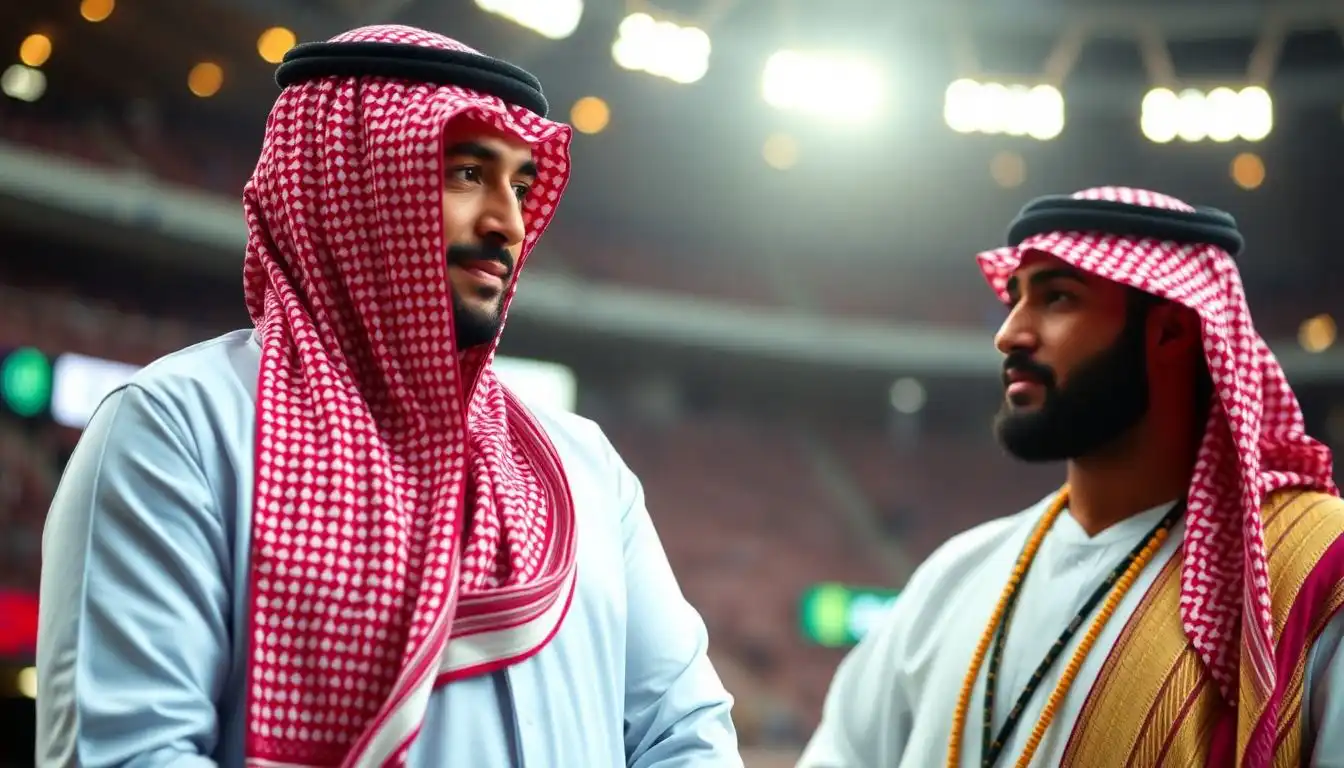
Saudi Arabia Quietly Abandons Global Sports Investment Push in One Sector: The world of high-stakes international finance is currently witnessing a massive strategic pivot. For several years, the Gulf’s deepest pockets seemed bottomless, sweeping up assets from European football to professional golf.
Now, a significant shift is occurring in the United Kingdom and Australia, as well as the United States, regarding specific niche sports media and broadcasting rights. Investors are starting to ask tough questions about why the promised flood of capital into digital sports streaming has suddenly dried up.
While the Public Investment Fund (PIF) remains a powerhouse in direct team ownership, the secondary market for sports technology and broadcast infrastructure is seeing a quiet exit. This change in direction has caught many industry analysts by surprise.
The Great Recalibration of Riyadh
For a long time, the narrative was simple: if a sporting asset was for sale, Saudi Arabia was the likely buyer. This aggressive strategy aimed to diversify the kingdom’s economy away from oil and gas, focusing instead on entertainment and tourism to drive future growth.
- Australia Driving Licence Rules for Over-75s 2026: What’s Changing for Senior Drivers
- 7 Yoga Poses For Better Flexibility And Mobility
- $931 Centrelink Payment Approved in Australia: Who Qualifies and When It’s Paid…
- Iran Strikes Australian Airbase as Gulf Attacks Escalate: Growing Tensions in the Region
- 5 Simple Yoga Poses To Build Strength And Tone
However, the reality of the balance sheet is finally catching up with the ambition of the vision. Returns on investment in the sports broadcasting and digital rights sector have been remarkably underwhelming compared to traditional infrastructure or direct stadium ownership.
Local financiers in Sydney and Melbourne are noting that the “blank cheque” era is officially over. Institutional investors are now demanding rigorous data on user acquisition costs and long-term dividend yields before committing more capital to speculative media ventures.
Why Broadcasters are Feeling the Pinch
The specific sector being abandoned is the high-cost world of OTT (Over-The-Top) streaming and specialized sports media platforms. In recent years, massive sums were poured into creating independent streaming services designed to rival global giants, but these platforms have struggled to turn a profit.
The high cost of rights relative to the small pool of paying subscribers has made these ventures a localized headache. Even with billions of Australian Dollars (AUD) in backing, the overheads of high-definition global delivery and marketing proved far more expensive than initially forecasted.
- Psychologists say the bond between a person and the dog that sleeps in their bed isn’t comparable to human attachment. It’s actually more stable, because the dog never withdraws affection as punishment, never keeps score, and never makes closeness conditional on performance.
- Nobody Warns You that The Fakest People You’ll Ever Meet Won’t Be the Obvious Ones – They’ll Be the Ones Who Remember Your Birthday, Ask About Your Kids, and Make You Feel Seen Right up Until the Moment Their Kindness Stops Being Useful to Them
- Psychology Says the Moment You Stop Trying to Become Your “best Self” and Start Accepting Your Actual Self Is the Moment Most People Describe as The Turning Point – Not Because They Gave up But Because They Finally Stopped Performing for An Audience that Was Never Going to Approve of Them Anyway
- Psychology says the reason most people never change their lives isn’t fear of failure – it’s that they’ve spent so long performing a version of themselves for other people that they genuinely can’t tell anymore which desires are actually theirs
- Psychology says the quiet rage many older men carry isn’t bitterness, it’s the accumulation of decades where expressing vulnerability would have cost them everything — their authority, their marriages, their self-respect — so they stored it as anger because anger was the only emotion their generation allowed men to keep
“The initial gold rush into sports media ignored the fragmentation of the digital audience. Investors assumed that exclusive content would automatically lead to high retention, but they underestimated the churn rate in a crowded market where consumers are cutting back on discretionary spending.”
A Shift toward Tangible Assets
Instead of chasing digital eyeballs, the move is now toward things that can be seen, touched, and experienced in person. This means more focus on Real Estate development, luxury resorts, and physical stadiums rather than the intangible pixels of a mobile app.
We are seeing a trend where the money is being pulled back from high-risk tech startups and redirected into established leagues with proven live-audience appeal. This “flight to safety” suggests that even the world’s largest sovereign wealth funds have a limit to how much loss they can absorb.
In Australia, the ripple effect is clear. Domestic leagues that were hoping for a massive bidding war for their next broadcast cycle are finding the room a lot quieter than it was twelve months ago. The expected “Saudi premium” is no longer a guaranteed factor in negotiations.
- If You Want To Find True Inner Peace, Start Saying “no” to These 8 Things
- $845 Age Pension Hike in April 2026: What Centrelink’s Latest Changes Mean for Pensioners
- $215.40 Centrelink Rent Assistance Increase 2025: Who Qualifies and Payment Details
- 9 Things People with Genuinely High Social Intelligence Never Do in A Conversation — and The One that Separates Them Most Clearly from People Who Are Merely Charming Is Something so Subtle that Most People Have Never Consciously Noticed It Happening
- Research Suggests People Who Shower at Night Instead of In the Morning Aren’t Just Washing Off the Day — They’re Running a Neurological Closing Ritual that Signals the Nervous System the Threat Window Has Ended, and The Water Isn’t Cleaning the Body, It’s Decommissioning a Surveillance State That’s Been Active Since They Opened Their Eyes
Investment Data and Changing Priorities
The following table highlights the estimated shifts in capital allocation across various sports-related sectors over the last three financial years.
| Investment Sector | 2022 Allocation (Est. AUD) | 2023 Allocation (Est. AUD) | 2024 Current Trend |
|---|---|---|---|
| Direct Team Ownership | $5.2 Billion | $8.4 Billion | Increasing |
| Sports Media & Broadcasting | $3.1 Billion | $1.8 Billion | Significant Decline |
| Infrastructure & Stadiums | $2.5 Billion | $4.2 Billion | Increasing |
| Gaming & Esports | $4.0 Billion | $3.5 Billion | Steady/Selective |
The Pressure from Global Financiers
It isn’t just a internal decision from the Middle East. Global financial hubs like New York and London are home to the consultants and bankers who facilitate these deals. These professionals are now advising more caution as the global interest rate environment remains volatile.
When money was cheap, speculative bets on the “future of fandom” made sense. Today, with capital being more expensive, there is a renewed focus on EBITDA and actual cash flow. The vanity projects that once defined the sports push are being trimmed to satisfy more conservative financial oversight.
This pivot indicates a maturing of the investment strategy. Rather than buying everything in the shop, the focus has moved to cherry-picking the items that provide a strategic advantage or a clear path to profitability within a five-year window.
- I’m 65 and the most frightening thing about losing my joy wasn’t losing it — it was how long it took me to notice it was gone, like a light that dims so slowly you keep thinking the room is fine until one day you can’t read anything anymore
- Psychology says people who never expect much from others often aren’t pessimistic—they’re just operating from experience
- $1,178 Centrelink Age Pension in 2026 – What The Increase Means For Australian Seniors
- Centrelink Payment Increase 2026: New Rates For JobSeeker Pensions And Youth Allowance
- Low-Income Australians Eligible for $2,000 Relief as Applications Close 1 April 2026
“The pivot signifies a transition from a ‘brand awareness’ phase to a ‘sustainability’ phase. Large-scale investors are no longer satisfied with just having their logo on a screen; they want to see a clear return on every dollar spent in the commercial ecosystem.”
Cultural Impact on the Australian Landscape
For Australian sports fans, this shift is more than just numbers on a page. The A-League, NBL, and various cricket formats have all looked toward international investment to boost their global standing. The softening of the sports media market means these leagues must look closer to home for growth.
The dream of a global streaming service that would pay billions for local rights is fading. Instead, domestic broadcasters like Seven, Nine, and Ten are finding themselves back in the driver’s seat. The lack of a competitive “third player” from the Gulf has reduced the leverage that sporting bodies once held.
Casual viewers might not notice a change in the product on the pitch, but behind the scenes, the belts are tightening. Marketing budgets for international tours are being slashed, and the expansion into digital-only content is being shelved in favour of traditional television reach.
- 6 Simple Poses To Improve Your Yoga Flow
- First‑Ever Camera Survey of Remote Tasmanian Island Reveals Rare and Elusive Wildlife
- Psychology says the parents whose adult children gradually stop visiting aren’t usually the ones who were cruel or absent — they’re often the ones so focused on providing and protecting that they never learned to simply be company, and children grow up moving towards the people they feel easy with rather than the people they owe the most to
- Psychology says the happiest people after 70 aren’t the ones who found purpose — they’re the ones who stopped demanding that every day justify itself, and that permission to exist without producing, achieving, or proving was the thing their happiness was waiting behind the entire time
- Centrelink cash boost: Millions of Australians to receive Services Australia payment increase
The Hard Lessons of Digital Saturation
There is a growing realization that the digital sports market is saturated. Between social media highlights and free-to-air coverage, getting people to pay for a dedicated sports sub-platform is a monumental task. This “app fatigue” is a primary reason the returns have been so disappointing.
Investors were told that Gen Z and Millennials would flock to these platforms. However, the data shows that younger audiences prefer bite-sized, free content on social platforms over long-form, paid broadcasts. This mismatch in consumer behavior has led to a major valuation correction in the sports media space.
Furthermore, the complexity of managing global rights across different jurisdictions is a legal nightmare. Each country has its own anti-siphoning laws and local content requirements, making a centralized global sports service far more difficult to manage than originally envisioned.
Where the Money is Going Instead
So, if the capital isn’t going into media rights, where is it being parked? The latest trend suggests a move into Combat Sports and Grand Prix events. these offer a “festival” style of investment where the revenue is generated through tickets, hospitality, and tourism rather than just subscriptions.
- Spraying Vinegar on The Balcony: What It’s for And Why Everyone’s Recommending It
- Centrelink New Payment Schedule 2026: What The Updated System Means For Australians
- Aldi’s Belavi Wooden Potting Bench Is a $40 Spring Gardening Must‑Have
- Rent Assistance for Pensioners Climbs to $188.20 per Fortnight in 1 April 2026
- Being in Your Late 30s and Suddenly Understanding Why Your Parents Stopped Having Hobbies Isn’t Depressing — It’s the Moment You Realize that The Gap Between Having Interests and Having the Energy to Pursue Them Is a Gap that Parenthood Fills with Something that Isn’t Quite Sacrifice and Isn’t Quite Choice, and Naming It Would Require a Word that Doesn’t Exist Yet
This is a more holistic approach to nation-building. By hosting a major fight or a race, the country attracts high-net-worth individuals and tourists who spend money in hotels and malls. A digital streaming app, by contrast, doesn’t bring a single tourist to a physical location.
The focus is now on “Live Entertainment Destination” (LED) models. This involves building entire districts around a stadium, complete with retail and residential assets. This model offers a much more stable and predictable return than the volatile world of digital advertising and streaming.
“The move away from digital media represents a tactical withdrawal. By focusing on physical infrastructure and live events, investors can create a more permanent legacy that survives changes in technology or viewing habits.”
Future Outlook for Global Sports Spending
The “quiet abandonment” of sports media investment doesn’t mean the Saudi influence is leaving sports entirely. On the contrary, their presence in Golf and Football is likely to intensify. It simply means they are becoming smarter, more ruthless investors.
- 5 Bedtime Yoga Poses That Calm the Mind and Improve Sleep
- 3 New Thriller Movies to Watch on Netflix This Week (March 19–25)
- I’m 66 and I Finally Understand that My Father’s Anger when I Came Home Late Wasn’t About Rules — It Was About the 45 Minutes He Spent at The Window Imagining Every Possible Version of What Might Have Happened, and By the Time I Walked Through the Door His Nervous System Had Processed so Many Catastrophic Simulations that The Relief Arrived as Fury Because His Body Didn’t Have a Calmer Way to Discharge the Accumulation
- I worked for 42 years, retired with more money than I ever imagined having, and by the third Wednesday of my new life I was reorganizing the garage at 10 a.m. just to feel like someone still expected something from me
- 6 Best Yoga Poses For Stress Free Days
The days of bailing out struggling tech platforms are over. Moving forward, any sports-related deal will likely undergo the same level of scrutiny as a mining project or an infrastructure bond. This maturity is a sign that the initial “honeymoon phase” of global sports acquisition has ended.
For Australian sporting executives, the message is clear: the path to growth must be self-sustaining. Relying on a giant international windfall to solve structural financial issues is no longer a viable strategy in a world where the biggest spenders are starting to count their pennies.
FAQs – Saudi Arabia Sports Investment Shift
Why is there a shift away from sports media investment?
The returns on digital streaming and media rights have been much lower than expected. High costs and audience fragmentation have made it difficult to turn a profit in this specific sector.
Is Saudi Arabia stopping all sports investments?
No, the withdrawal is specific to the sports media and digital broadcasting sector. Investment in direct team ownership, physical stadiums, and live events remains very strong.
- $341 Parking Fines: Bayside Council Launches New Reporting System…
- Centrelink Increase 2026: New JobSeeker, Pension and Youth Payment Rates Revealed…
- I bought my grandparents’ house and lived next to my mom. When she decided to move, it was hard on both of us.
- Psychology says people who grow apart from their family as they age aren’t cold or ungrateful – they’re often the ones who finally stopped performing a version of themselves that kept the peace but cost them their identity
- Australia Age Pension Increase 2026 Guide
How does this affect Australian sports leagues?
It reduced the likelihood of a massive bidding war for television rights. Local leagues may need to rely more on domestic broadcasters rather than expecting a global streaming buyout.
What are “Live Entertainment Destination” models?
This involve building physical infrastructure like hotels, shops, and apartments around a stadium to ensure multiple streams of revenue beyond just ticket prices.
Why are financiers asking what changed?
Institutional investors are concerned about the sustainability of high-spend, low-return digital projects. They are now pushing for more transparency and traditional profit metrics.
Will fans see a change in how they watch sport?
In the short term, no. However, in the long term, there may be fewer niche streaming apps as the market consolidates back toward established media giants and free-to-air TV.
- 43 Years Ago, Scientists Dropped Gophers Onto a Volcano. Today, They’re Tiny Heroes.
- Centrelink Digital Payment System From 1 April 2026: Faster Benefit Deposits For Australians
- Centrelink Compliance Alert April 2026: What the Loss of Up to $7,800 in Benefits Means for Claimants
- Little-Known Fact: Japan Controls 95% of A Material Crucial to Nvidia’s Ai Chips, Thanks to Ajinomoto
- American Tourist Briefly Detained in Bali for Breaking ‘Day of Silence’ Rules
What is the “Saudi premium”?
This refers to the inflated prices that sellers used to charge when they knew a Gulf-based fund was the buyer. This premium is disappearing as the funds become more selective.
Are other countries also pulling back on sports spending?
Yes, many private equity firms and sovereign funds are re-evaluating their portfolios due to higher interest rates and a more cautious global economic outlook.